


At its heart, the difference between silver plated and sterling silver cutlery is all about composition. It’s a distinction that defines everything from its feel in your hand to its value over a lifetime.
Sterling silver is a solid precious metal alloy, made from 92.5% pure silver mixed with other metals for strength. A sterling silver fork is silver through and through. In stark contrast, a silver plated piece is made from a less expensive base metal—often nickel or brass—that’s been given a whisper-thin coating of pure silver.
Understanding The Core Distinction
When you’re choosing fine cutlery, "sterling silver" and "silver plate" aren't just descriptions; they represent two completely different philosophies of quality, permanence, and value. Getting to grips with this is the first, most crucial step in making a choice that truly fits what you need. Are you buying a wedding gift to last a lifetime, outfitting a high-end restaurant, or starting a collection to pass down through the family?
The value of sterling silver is intrinsic—it comes directly from the precious metal it's made of. The value of silver plate, on the other hand, is in its beauty and accessibility. This single difference in how they are made dictates everything that follows: how they wear, how you care for them, and whether they become a treasured heirloom or a well-loved piece for today.
Composition and Authenticity
The surest way to tell one from the other? Look for the hallmarks. In the UK, genuine sterling silver is legally required to be hallmarked. These small, stamped marks are your guarantee of purity, telling you who made it, where it was assayed, and confirming its 92.5% silver content. Think of it as a certificate of authenticity stamped directly into the metal.
Silver plated cutlery doesn't have this kind of strict regulation. You might spot markings like 'EPNS' (which stands for Electro-Plated Nickel Silver) or just the maker's name. These tell you how it was made, but they don't certify any precious metal content. For anyone thinking about long-term value, this is a critical distinction.
A hallmark is your cast-iron guarantee of solid sterling silver. If it doesn't have one, you can be almost certain the piece is silver plated or made from another metal entirely.
To help you see the key differences at a glance, we've put together a simple table breaking down the essential attributes of each.
Core Attributes At A Glance
| Attribute | Sterling Silver | Silver Plated |
|---|---|---|
| Composition | Solid alloy of 92.5% pure silver and 7.5% other metals (usually copper). | A thin layer of pure silver electroplated over a base metal (e.g., nickel, brass). |
| Hallmarking | Legally required in the UK; features marks indicating purity, maker, and assay office. | Not hallmarked; may be stamped with 'EPNS' or the manufacturer's brand. |
| Intrinsic Value | High, based on its significant precious metal content. Retains or appreciates in value. | Low intrinsic value; primarily aesthetic. Depreciates with use and wear. |
| Longevity | Heirloom quality; can last for centuries with proper care. | Finite lifespan; plating will eventually wear away, exposing the base metal. |
This table neatly sums it up: one is an investment in a precious metal built to last for generations, while the other offers affordable elegance for a shorter lifespan.
Exploring Material Composition And Craftsmanship
The elegance of a silver fork or spoon isn't just about its beautiful design; it’s a story told by the metal itself. Understanding what goes into sterling silver versus silver plate reveals why one becomes a family heirloom and the other is a wonderfully practical, beautiful alternative for your table.
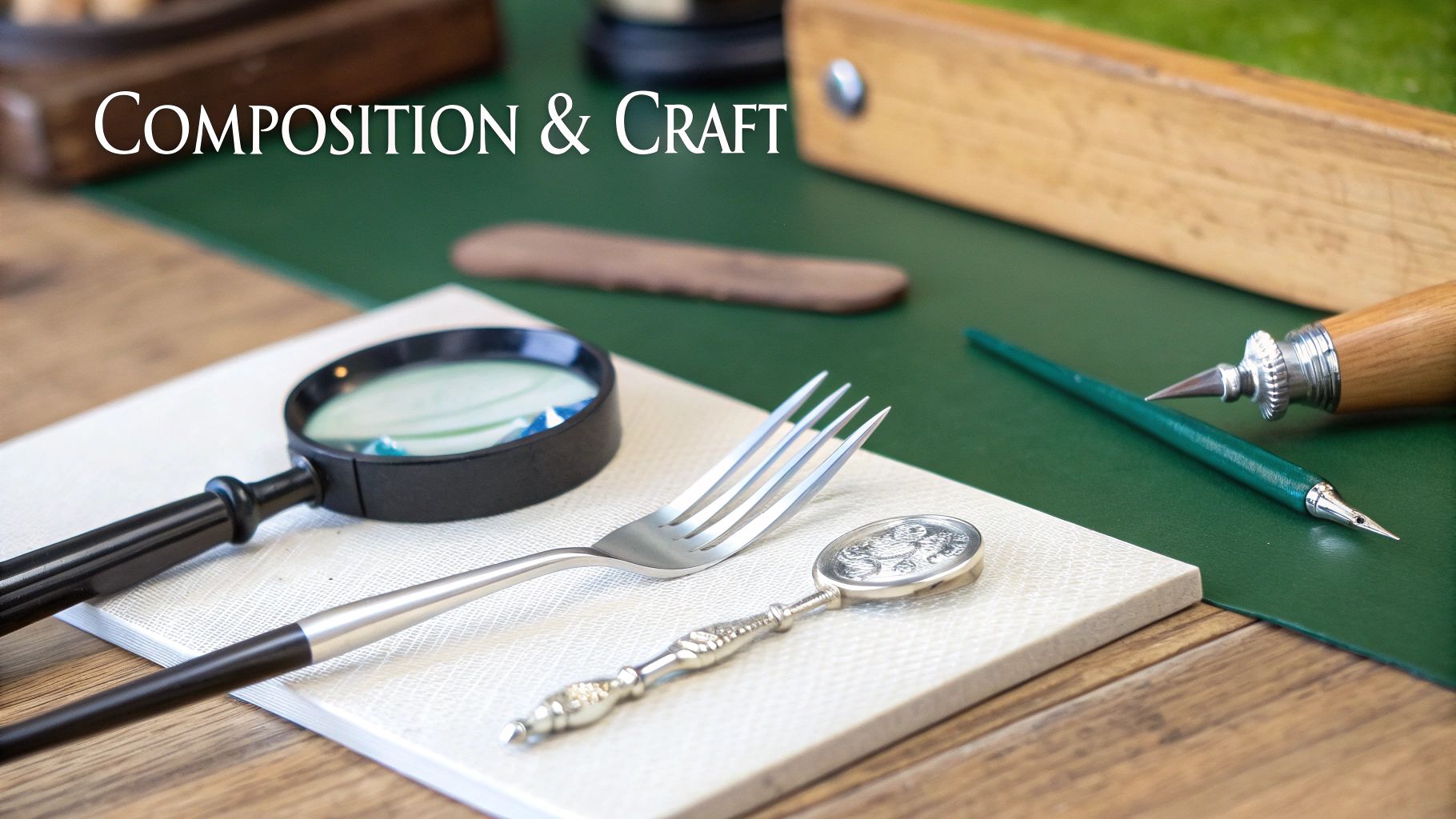
The difference starts at the core. One is a solid, precious alloy valued for its intrinsic worth, while the other is a clever layering of metals, prized for making luxury accessible.
The Sterling Silver Alloy: A Mark Of Purity
You might be surprised to learn that true sterling silver isn't pure silver. Pure, or fine, silver is much too soft for something as functional as cutlery – it would bend and scratch far too easily with everyday use. To solve this, silversmiths create a special alloy.
For centuries, the gold standard has been 92.5% pure silver combined with 7.5% of other metals, usually copper. This recipe, known as ‘925 silver’, hits the perfect sweet spot. The copper lends the strength and durability needed for dining, while the high silver content provides that unmistakable lustre and precious value.
The ultimate proof is in the hallmark. In the UK, the four assay offices—London, Birmingham, Sheffield, and Edinburgh—provide a legal guarantee. Sterling silver must be precisely 92.5% pure silver alloyed with a strengthening metal. Silver plated items, on the other hand, consist of a base metal with only a thin coating of silver, and have no mandatory hallmarking for plating thickness. This rigorous system, with roots in the 1300s and modernised in the Hallmarking Act 1973, gives buyers complete confidence. You can find out more about the UK's silver jewellery market regulations.
The hallmark isn't just a stamp; it's a legal guarantee. Each mark tells a story of origin, date, and purity, providing an unbreakable chain of authenticity that underpins the value of every sterling silver piece.
These tiny marks, like the Lion Passant which guarantees sterling purity, turn a beautiful object into a verifiable asset. When you buy hallmarked cutlery from renowned makers like Carrs of Sheffield, you're investing in quality certified by law.
The Art Of Silver Plating: A Delicate Science
Silver plated cutlery offers craftsmanship of a different sort. Instead of being solid alloy, each piece has a base metal core coated with an incredibly thin layer of pure silver. The quality of any silver plated item comes down to two things: the quality of the base metal and the thickness of the silver coating.
In premium cutlery, the most common base is Nickel Silver, often stamped as EPNS (Electro-Plated Nickel Silver). It’s an alloy of copper, nickel, and zinc, chosen because it’s strong, resists corrosion, and has a silvery appearance itself. Other metals like brass are also sometimes used.
The silver layer is applied through a process called electroplating. The base cutlery is submerged in a bath containing silver ions. When an electric current is passed through, these ions bond to the base metal, forming a perfectly smooth, even, and lustrous coating.
How long this coating lasts is measured in microns (one-thousandth of a millimetre).
- Standard Plating: Often around 10-20 microns, perfectly suitable for pieces that see less frequent use. Both our Sheffield range and Carrs Silver use 20 microns.
- Heavy Plating: Can be 25-40 microns or more, offering far better longevity for cutlery you plan to use every day. Arthur Price Sovereign Silver Plate has an impressive 25 microns of silver plate.
- Massive Plating: 60-micron silver plate, such as Robbe & Berking, represents a high-end, durable layer of silver deposited onto a base metal (nickel silver ) through an electroplating process. In the world of silver plating, where standard quality ranges from 10 to 20 microns, 60 microns (or 60μm) is exceptionally thick, and is the 'next best thing' to sterling silver.
This is why famous brands like Robbe & Berking & Christofle are known for their exceptionally thick and durable plating, allowing their pieces to last for decades. When weighing up silver plated vs sterling silver, the thickness of this plated layer is the single most crucial factor in determining how long its beauty will endure before the base metal starts to peek through.
Comparing Durability, Longevity, And Practical Use
When you’re choosing between silver plated and sterling silver cutlery, the decision often boils down to one very practical question: how long is it going to last? The answer gets right to the heart of what makes them different—one is designed for everyday elegance, the other is a legacy to be passed down through the family.
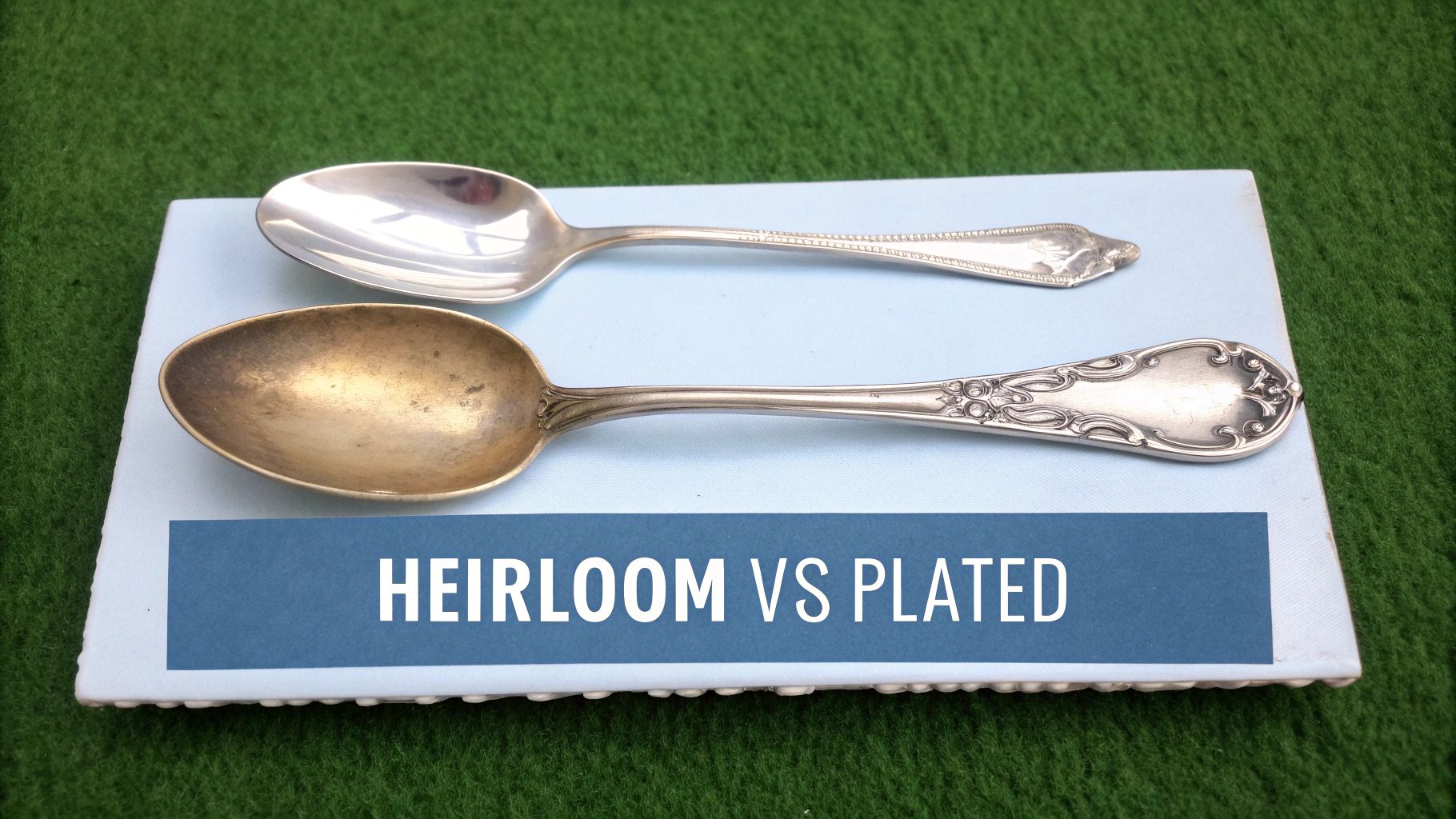
Sterling silver is, by its very nature, an heirloom material. Because it's a solid alloy, the silver runs all the way through each piece. With a bit of care, a sterling silver canteen isn’t just for your lifetime; it’s for many lifetimes.
In contrast, even the very best silver plate has a finite lifespan. Its beauty and function depend entirely on that microscopic layer of pure silver bonded to a base metal. While premium plating can last for decades of careful use, it will, eventually, wear down.
Lifespan Expectations: A Realistic View
Understanding the durability of each is key to making a choice you’ll be happy with. The two materials simply operate on different timelines, built for different needs and priorities.
Sterling silver’s longevity is measured in centuries, not years. Its solid construction means that scratches, minor dents, and even the effects of polishing only remove minuscule amounts of the same material. Its integrity is never compromised. In fact, many collectors and connoisseurs cherish the gentle wear that develops over decades of use.
This deep, soft lustre acquired over time is known as patina. It’s a hallmark of authenticity and tells the visual story of a piece’s history—something you just can't replicate with plated items.
For silver plate, the story is quite different. Its lifespan is directly tied to the thickness of its silver layer, which is measured in microns.
- Massive Silver Plate (60 microns): Plating thickness directly correlates to lifespan, with a general industry guideline of approximately 1 micron per year of heavy daily use. Therefore, 60-micron plating is designed for extreme durability, often found on high-quality, long-lasting, or luxury items that can last for decades or even generations.
- High-Quality Plate (30-40 microns): With careful hand washing and proper storage, a premium set like those from Lincoln House can provide 30-50 years or more of regular service with careful maintenance.
-
Standard Plate (20 microns): Is still suited for daily use and can provide 20-30 years of regular service.
The crucial difference is this: sterling silver ages gracefully, developing character with use. Silver plate wears out, eventually revealing the different-coloured base metal beneath and losing its luxurious finish.
How Each Material Responds To Daily Life
Beyond just lifespan, think about how each material handles the realities of dining, cleaning, and storage. Their reactions to scratches, dents, and tarnish are distinct and will impact both their appearance and the care they need.
Scratches and Dents
Sterling silver is relatively soft but remarkably resilient. While it can scratch, these marks simply become part of its celebrated patina. A deep scratch on a sterling spoon is still just a scratch in solid silver. A similar gash on a plated fork, however, can cut straight through the silver layer, exposing the nickel or brass underneath. This kind of damage can accelerate wear and is very difficult to repair seamlessly.
Tarnish and Discolouration
Both materials tarnish when exposed to sulphur in the air, but they handle it very differently.
- Sterling Silver: Tarnishes uniformly and can be polished back to its original shine time and time again without any damage. The process is straightforward, and the underlying material is never at risk.
- Silver Plated: Also tarnishes, but aggressive or frequent polishing is its greatest enemy. Every time you polish, you are removing a tiny amount of that finite silver layer. Over-polishing is the fastest way to wear right through the plating.
This practical distinction makes sterling silver a far more robust choice for anyone planning on frequent use, whether in a restaurant or for daily family meals. The forgiving nature of solid silver means it can withstand the rigours of constant handling and cleaning far better than any plated alternative could hope to.
Understanding Investment Value And Lifetime Cost
When you’re choosing between silver plated and sterling silver cutlery, the price on the tag only tells you part of the story. To really understand the financials, you need to look at the lifetime cost, resale potential, and long-term value. It’s a classic case of a purchase for today versus an asset for tomorrow.
The most obvious difference is the initial outlay. Sterling silver has a significant premium because its price is directly linked to its precious metal content—it is, after all, 92.5% pure silver. Think of a sterling silver teaspoon not just as a utensil, but as a small, functional bar of a valuable commodity.
Silver plated cutlery, on the other hand, is far more affordable. Its value is in the beautiful finish and craftsmanship, not the raw materials. This makes it a fantastic way to bring that luxurious feel to your table without the hefty financial commitment of solid silver.
Sterling Silver As A Tangible Asset
The real financial genius of sterling silver is its ability to hold, and often increase, its value over time. Like gold, silver is a traded commodity. Its base value will fluctuate, but it rarely disappears. This is what makes hallmarked sterling cutlery a tangible asset that can be passed down as a family heirloom or sold down the line.
Its value really shines in the antiques market. A full canteen of hallmarked sterling silver from a respected maker can become a highly sought-after collector's piece, often selling for far more than its original price. It’s an exceptional choice for a milestone wedding gift or a legacy purchase for your own family.
For the discerning buyer, sterling silver is more than just cutlery; it's an investment in portable, functional wealth. Its hallmarked authenticity provides a guarantee of value that no plated item can ever match.
The Depreciation Of Silver Plated Items
Silver plated items, while lovely, follow a different financial path. Because their core value is aesthetic rather than material, they tend to depreciate over time, a bit like a new car driving off the forecourt. Once the silver layer starts to show signs of wear, its resale value drops quite a bit.
Of course, high-quality plated pieces from renowned brands can hold some value, but they are not considered a financial investment. Their worth is in their immediate use and the elegance they provide for a certain period. It’s a critical distinction to make when you’re weighing up initial savings against long-term performance.
For example, silver plated cutlery is popular for being 50-70% more affordable upfront. A Christofle-inspired centrepiece in silver plate might be £200, whereas its sterling equivalent could easily be £600 or more. However, heritage dealer estimates suggest plated items often see a 25-40% loss in resale value once tarnish and wear become noticeable. With five decades of experience curating over 300 designs, we at Lincoln House have seen this time and again; sterling items like beakers and candlesticks can retain 80-90% of their value decades later, secured by their authentic hallmarks. You can find more insights into sterling silver market dynamics here.
Calculating Lifetime Cost
To get a true comparison of silver plated vs sterling silver, you have to think about "lifetime cost." A good quality silver plated set might last for 20-30 years before it needs replacing or re-plating, which is a recurring expense.
A sterling silver set, however, is a one-time purchase. With proper care, it will last for centuries, serving generations without ever needing to be replaced. When you divide its higher initial cost over a potential lifespan of 100-plus years, its long-term cost-effectiveness becomes crystal clear. This makes it the superior choice for anyone who prioritises durability and enduring value.
A Practical Guide to Care and Maintenance
Looking after your silverware, whether it’s solid sterling or fine silver plate, is all about understanding what makes each one special. While they both love a bit of proper care, their very nature means they need slightly different handling when it comes to cleaning, polishing, and storing. Getting this right is the secret to enjoying your cutlery for a lifetime—or even passing it down through the family.
Here’s the simplest way to think about it: sterling silver is tough and resilient, while silver plate needs a lighter touch. Imagine sterling as solid wood that can be sanded and brought back to life, whereas silver plate is more like a beautiful veneer—scratch it too hard, and you’ll wear through it. This one idea shapes every part of how you should look after them.
Routine Cleaning for Both Types
For both silver plated and sterling silver cutlery, the golden rule is to wash it by hand as soon as you can after a meal. A bit of warm, soapy water and a soft cloth is all you need. This quick wash stops any leftover food, especially salty or acidic things, from leaving marks or causing damage. Always rinse well and dry straight away with a soft, lint-free cloth to avoid those pesky water spots.
We're often asked if silverware can go in the dishwasher. The answer is a firm 'yes', but you need to take precautions:
- Avoid Harsh Detergents: Many dishwasher tablets and powders can be too abrasive. They can cause tiny pits on the surface of sterling silver and will quickly wear away the silver layer on plated items. Pick a detergent WITHOUT lemon.
- Turn Down the Heat: The intense heat from a dishwasher’s drying cycle can tarnish the finish and sometimes even discolour the silver over time. Always wash at 50 degress celsius or below.
- Contact Damage: When cutlery clatters against other items in the dishwasher, it’s a recipe for scratches and dents that are difficult to fix. Therefore a cutlery drawer at the top of the dishwasher is better than a cutlery basket, as the drawer means you can lay each piece horizontally, so they don't come into contact with other pieces.
Hand washing is still the single most important habit you can adopt to preserve your silverware. It’s the best step for maintaining both the deep lustre of sterling silver and the delicate finish of high-quality silver plate.
The Art of Polishing
Tarnish is that natural darkening that happens when silver meets sulphur in the air, and it affects both sterling and plated pieces. When it comes to polishing it away, however, you need to use a different approach for each to avoid doing any lasting harm.
Because it’s silver all the way through, sterling can be polished with confidence. Using a good quality silver polish and a soft cloth will bring back its brilliant shine, time and time again. Over the years, any tiny surface scratches that appear simply add to its character, creating a beautiful patina that tells the story of its use.
Silver plated cutlery, on the other hand, requires a much more delicate hand. Every time you polish, you’re rubbing away a microscopic amount of that precious silver layer. Polishing too often or too hard is the fastest way to wear right through to the base metal underneath. For this reason, always use a gentle, non-abrasive silver polish and only when you really need to get rid of tarnish.
Long-Term Storage and Restoration
Storing your cutlery properly is the best way to keep tarnish at bay and prevent scratches. The ideal solution is to wrap each piece in acid-free tissue paper or keep it in a felt-lined canteen or cutlery roll. These purpose-made storage options shield the silver from the air and stop the pieces from knocking against each other.
If your cutlery does suffer from significant wear or damage, what you can do next depends on the material. A worn silver plated fork or spoon can often be professionally re-plated. This is a process where a fresh layer of silver is bonded to the base metal, giving it a completely new lease of life.
Sterling silver will never need re-plating. If it gets heavily tarnished, scratched, or even dented, it can be taken to a professional silversmith. They have the skills to professionally polish, repair, and restore the piece to its former glory without harming its integrity, ensuring it remains a treasured heirloom for generations to come.
How To Choose The Right Silverware For Your Needs
Deciding between sterling silver and silver plate isn't about which one is "better" but about which is the right fit for you. The best choice really comes down to balancing how you'll use it, your personal taste, and what you want from it in the long run. By understanding what makes each unique, you can choose with confidence.
Sterling silver is, without a doubt, the choice for investments and moments you want to last a lifetime. Its value is inherent in its solid precious metal makeup, making it a real asset that can be passed down and cherished for centuries.
On the other hand, a high-quality silver plate gives you that luxurious look and feel of solid silver at a much more approachable price. It’s the perfect solution for bringing a touch of elegance to occasions where the heirloom quality of sterling isn't the top priority.
The Occasion-Based Decision
Thinking about how you intend to use the cutlery is the most practical way to make your choice. For life's big milestones, legacy purchases, or in settings where only the absolute best will do, sterling silver is the clear winner.
Think about these situations:
- A Landmark Wedding Gift: For a gift meant to become a family treasure, nothing compares to hallmarked sterling silver. It speaks of permanence, tradition, and a lasting investment in the couple’s future together.
- The Family Heirloom: If you're buying a canteen of cutlery to be passed down through your family, sterling is the only material that can truly stand the test of time, gaining character with each new generation.
- Luxury Hospitality: For fine dining restaurants, the authenticity and sheer resilience of sterling silver often justify the initial cost, showing a true commitment to uncompromising quality.
This chart can help you visualise the key things to consider when choosing and caring for your silverware. 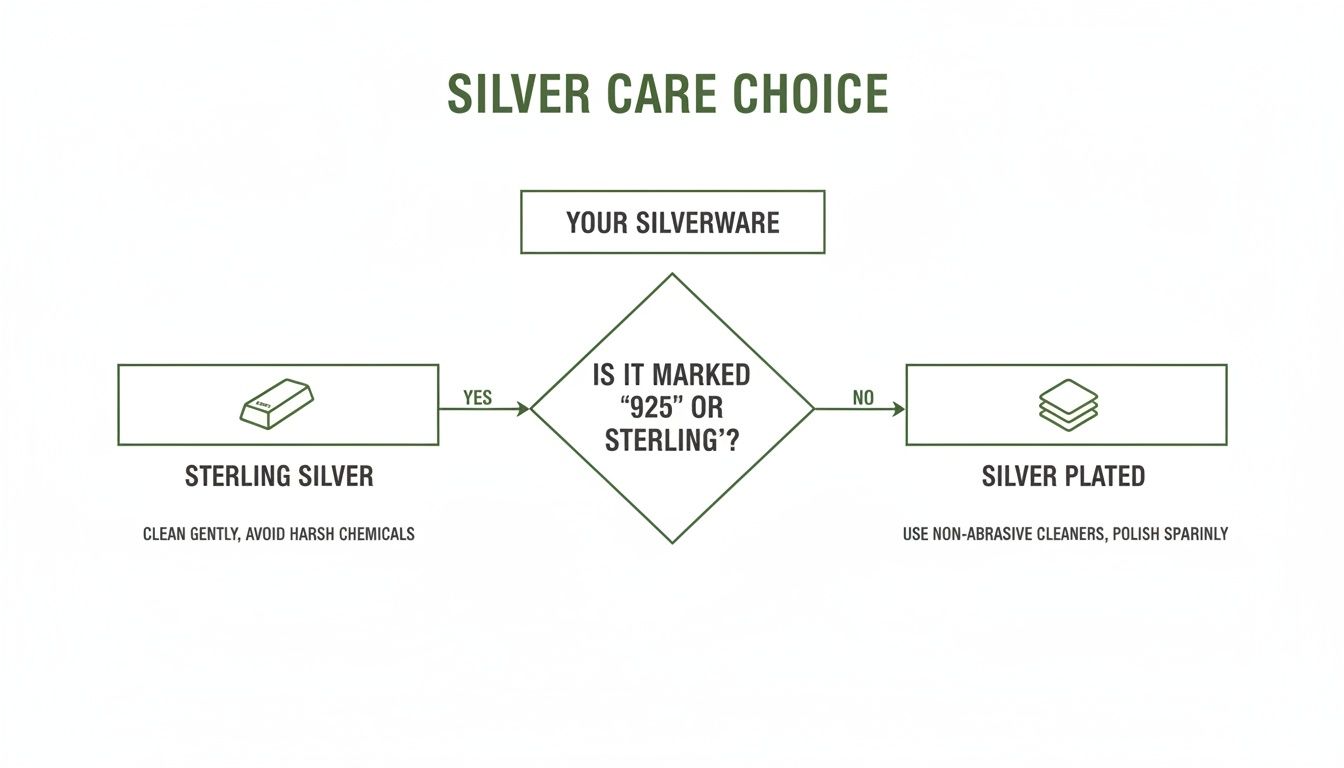 It simplifies the decision by linking the type of silver directly to its best use and how to look after it.
Everyday Elegance and Practicality
There are plenty of times when a premium silver plate isn't just a good option—it's the smartest one. It lets you enjoy the beauty of silver without the significant financial commitment.
For everyday dining or furnishing a second home, a high-quality silver plate provides the perfect blend of aesthetic appeal and practicality. It delivers the desired elegance without the worry associated with using a valuable asset daily.
Consider these contexts:
- Daily Dining: A robust, thickly plated set from a reputable maker can offer years of beautiful service for family meals.
- Second Homes or Holiday Lets: When practicality and budget are important, silver plate brings a touch of luxury that is easy to maintain or replace if needed.
- Exploring Designs: If you love to change up your table settings, the affordability of silver plate means you can collect different patterns without a major investment.
Ultimately, by matching the material to the moment—sterling for legacy, silver plate for accessible luxury—you ensure your choice will bring you satisfaction for years to come.
A Few Common Questions About Silver Cutlery
When you're choosing between silver plated and sterling silver, a few practical questions always seem to pop up. Whether you're thinking of buying your first set, looking after cutlery you already own, or just curious about the differences, getting clear answers is key. It helps you feel confident in your decision and get the most from your beautiful tableware. Here are straightforward answers to the most common queries we hear.
How Can You Tell if Cutlery Is Sterling or Plated?
The easiest and most reliable way is to look for the hallmarks. Here in the UK, any genuine sterling silver piece is legally required to be stamped with a series of official marks. The most important one to look for is the iconic lion passant, which guarantees the piece is made from 92.5% pure silver. These marks are the definitive proof of solid sterling silver.
Silver plated items, on the other hand, won't have these official assay marks. Instead, you'll likely find manufacturer's stamps like 'EPNS' (which stands for Electro-Plated Nickel Silver), 'A1', or simply the brand’s name. If you can't find the official hallmarks, you can be almost certain the piece is plated, not solid sterling.
Can Silver Cutlery Go in the Dishwasher?
All our sterling silver and silver plate cutlery is dishwasher safe - modern technology has improved greatly and means that modern silver cutlery can go in the dishwasher, whereas antique silver should still always be washed by hand. the dishwasher can be a harsh environment, so follow the steps outlined above to ensure safe use.
Is Sterling Silver Worth the Investment for Daily Use?
Absolutely, as long as it fits your lifestyle and you appreciate using fine materials every day. Sterling silver isn't just for 'best'; it's a surprisingly tough and practical material that’s more than capable of handling daily meals. Because it’s solid silver all the way through, it will never wear out like plated alternatives can.
In fact, over time, daily use gives sterling silver a unique and beautiful patina—a soft, warm lustre that many collectors and enthusiasts truly value. This gentle wear tells the story of shared family meals. When you combine that with its ability to hold and often increase in value, sterling silver becomes an excellent choice for a functional heirloom that brings a touch of luxury to every single day.
At Lincoln House Cutlery, we offer expert guidance to help you choose between exquisite sterling silver and premium silver plated collections. Explore our curated ranges from the world's finest silversmiths.
