
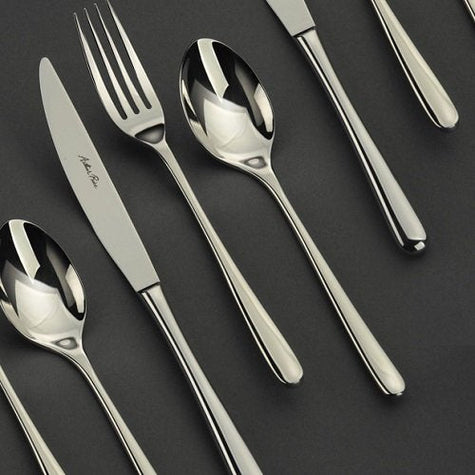
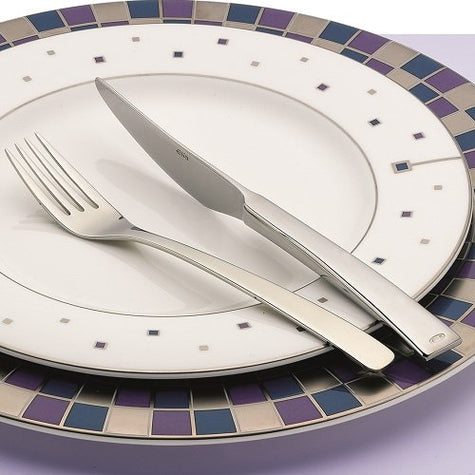
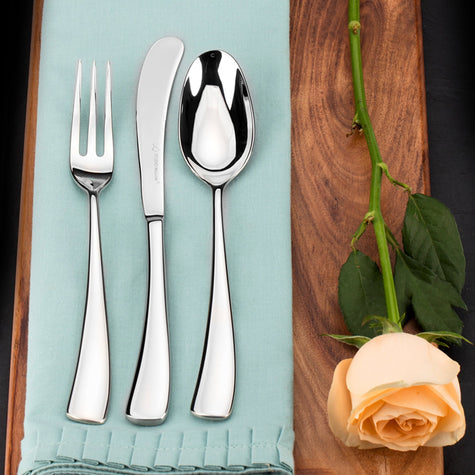
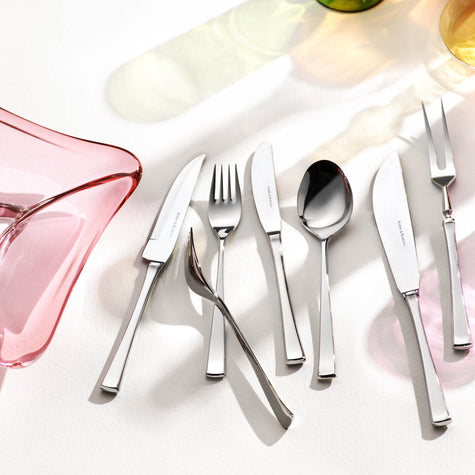
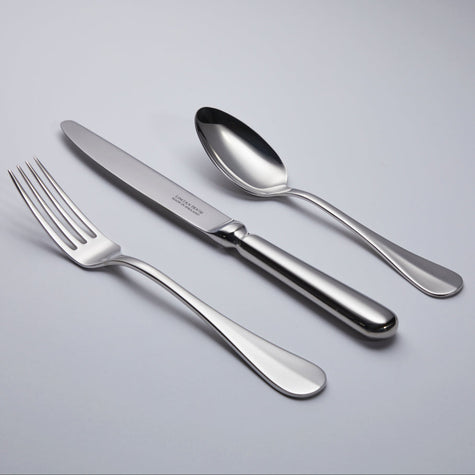
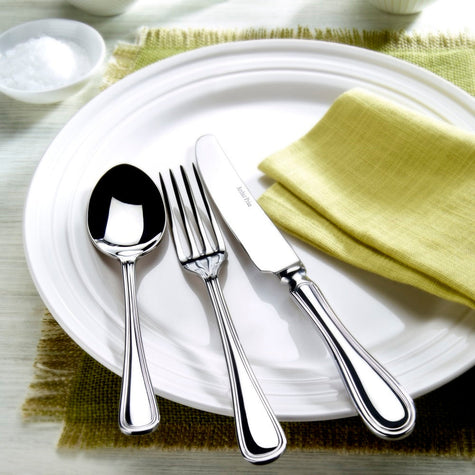
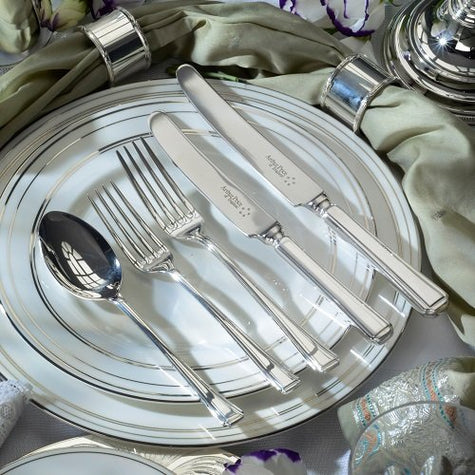
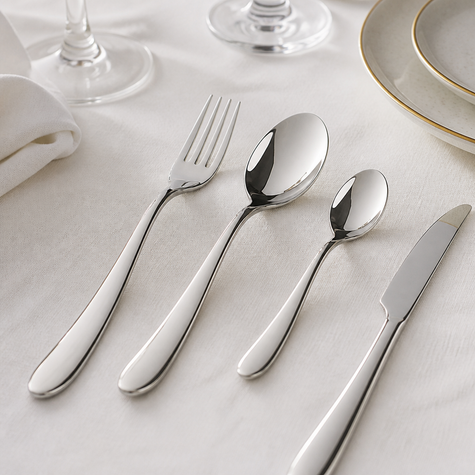
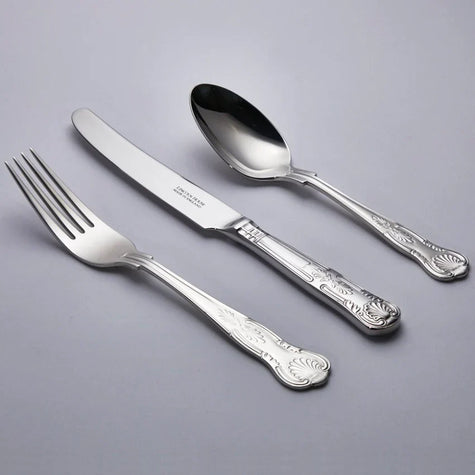
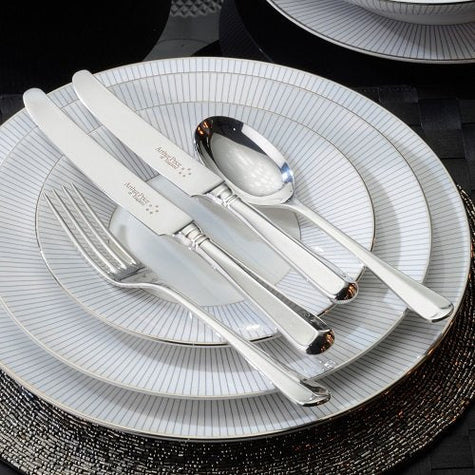
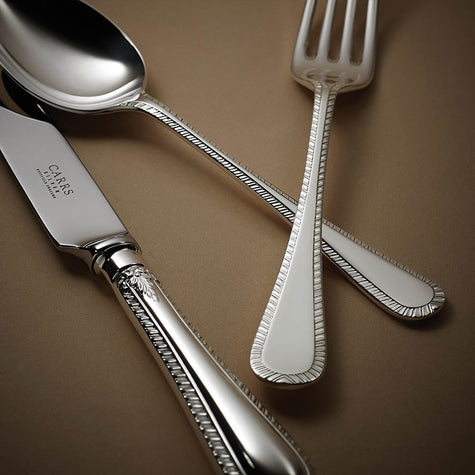
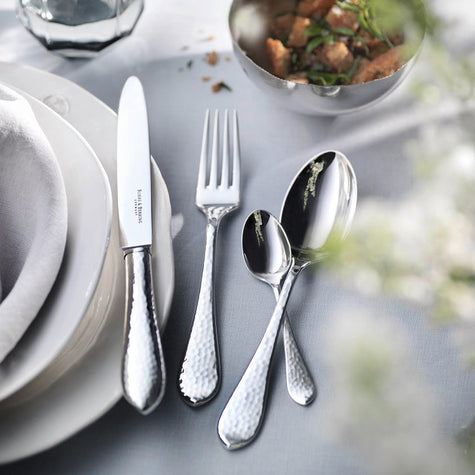
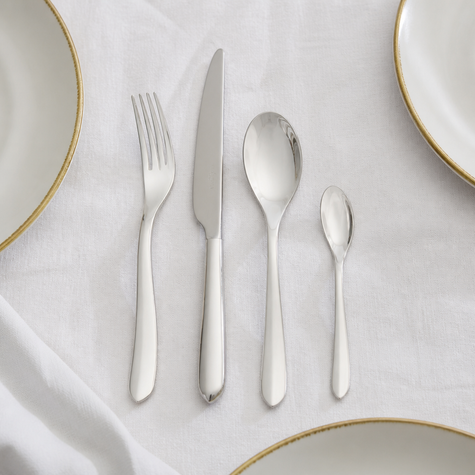
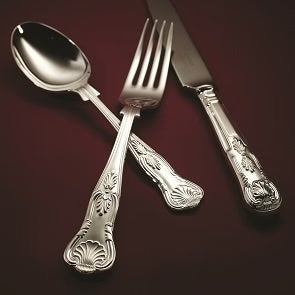
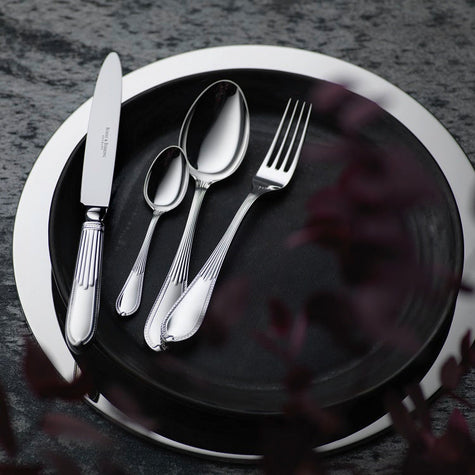
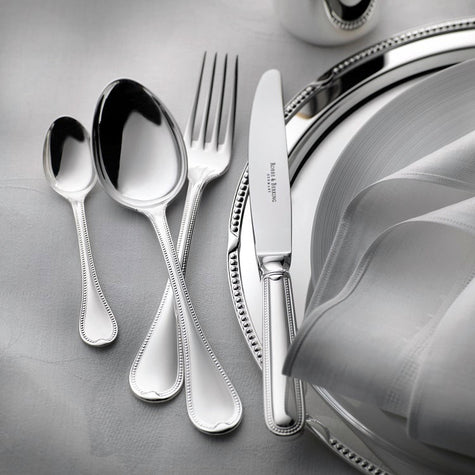
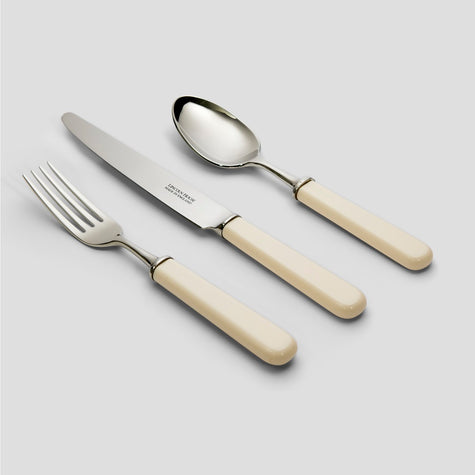
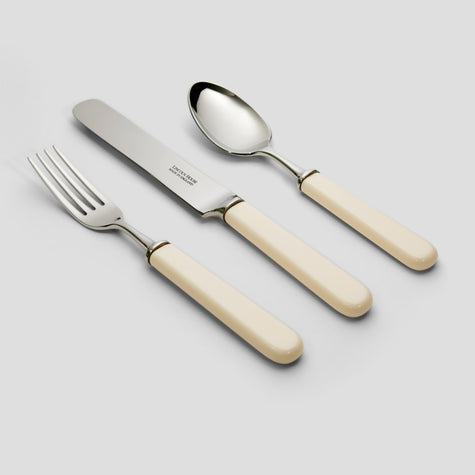
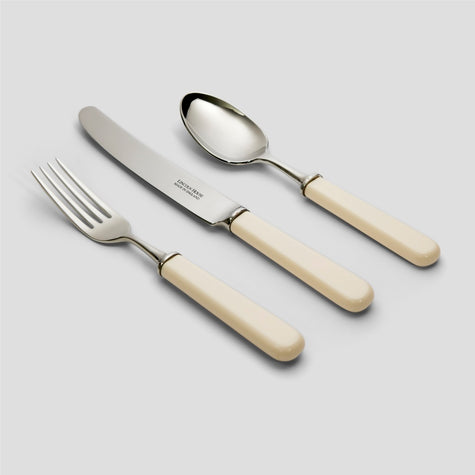
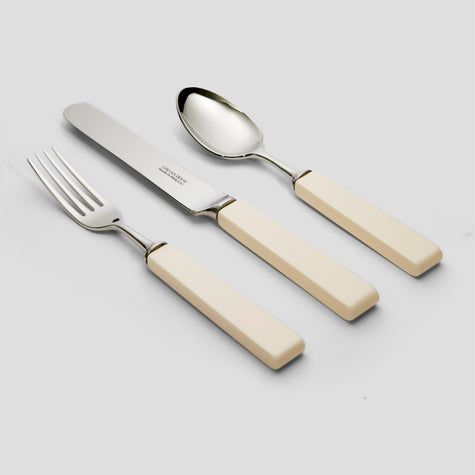

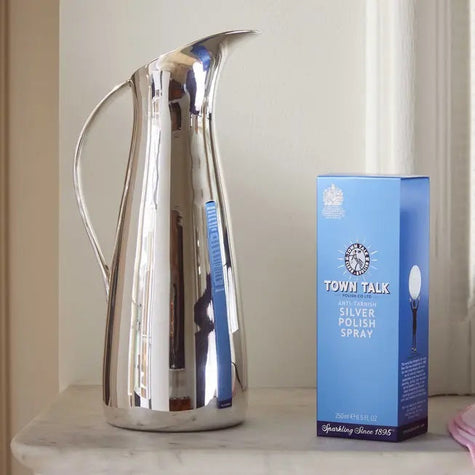
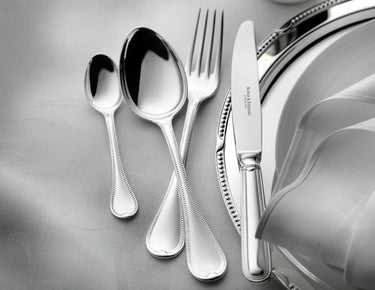
Silver plate brings formal elegance and a warm, lustrous finish to the table; stainless steel offers everyday durability and effortless care. The right choice depends on how often you entertain, how much maintenance you're prepared to do, and the kind of table you want to set.
Key Takeaways
- Silver plate is sterling silver's more accessible cousin — a base metal coated in a layer of real silver, giving it genuine lustre at a lower price than solid sterling.
- Stainless steel, particularly 18/10 grade, is dishwasher-safe, rust-resistant, and built to handle daily use without tarnishing.
- Silver plate requires hand-washing and periodic polishing to maintain its finish; stainless steel demands almost no upkeep.
- At Lincoln House, silver plate sets are most often chosen for formal dining, gifting and special occasions; stainless steel for everyday use, first homes and hospitality.
- Both materials are available as individual replacement pieces — so whichever you choose, you'll never need to replace an entire set.
What Is Silver Plate Cutlery?
Silver plate cutlery is made from a base metal — typically brass, nickel silver or stainless steel — electroplated with a layer of real silver. The thickness of that silver coating, measured in microns, determines how long the finish lasts and how the piece feels to hold. A well-made silver plate fork has genuine weight and warmth; run your thumb along the back of a bowl and you'll feel why people reach for silver plate when the occasion calls for something special.
The finish is bright and reflective in a way that stainless steel rarely matches. That quality makes silver plate the natural choice for formal dining tables, candlelit suppers and celebration meals — occasions where the cutlery is as much a part of the setting as the china and crystal.
What Is Stainless Steel Cutlery?
Stainless steel cutlery is an alloy of iron, chromium and, in the best grades, nickel. The grade that matters most is 18/10 — 18% chromium for corrosion resistance and 10% nickel for brightness and hardness. This is the grade used by 5-star hotels and Michelin-starred restaurants precisely because it holds its appearance through thousands of commercial dishwasher cycles.
18/10 stainless steel does not tarnish, does not rust under normal conditions, and keeps its polish without any special attention. A well-weighted 18/10 piece sits in the hand with real solidity. It's not a compromise; it is a different kind of quality — one built for the long run of ordinary life.
Silver Plate vs Stainless Steel: A Direct Comparison
| Feature | Silver Plate | Stainless Steel (18/10) |
|---|---|---|
| Appearance | Warm, bright silver lustre | Cool, reflective shine |
| Best for | Formal dining, gifting, special occasions | Everyday use, hospitality, first homes |
| Care | Hand-wash; polish periodically | Dishwasher-safe; minimal upkeep |
| Durability | Plating wears over decades with heavy use | Effectively lifelong with normal use |
| Price range | Moderate to high | Moderate to high (premium grades) |
| Tarnish risk | Yes — requires polishing | No |
| Suitability for trade | Formal banqueting, special menus | High-volume restaurant service |
How Long Does Silver Plate Last?
A quality silver plate set, properly cared for, will stay in fine condition for decades. The practical limit is the plating itself — with very heavy daily use and machine-washing, the silver layer will eventually wear thin at the high points: the tips of tines, the back of bowls, the edges of blades. Hand-washing and occasional polishing removes that risk almost entirely.
Brands such as Robbe & Berking and Christofle apply particularly generous plating to their pieces, which is one reason their silver plate cutlery commands a higher price and a longer service life. In our work with Lincoln House clients, we've seen well-maintained Robbe & Berking silver plate sets in daily formal-dining service for thirty years without significant wear.
Which Is Better for Everyday Use?
For everyday meals — weekday dinners, packed dishwasher loads, children at the table — stainless steel is the practical answer. Makers such as Arthur Price, Studio William and Elia produce 18/10 sets that are genuinely beautiful in their own right, not merely functional. A well-designed stainless steel pattern from any of those makers will feel satisfying in the hand and look as good on a dressed table as it does on a casual one.
Silver plate is not the right choice if the cutlery will go through a dishwasher every night. The heat, moisture and detergent accelerate wear on the plating and can cause discolouration over time.
Which Is Better for Special Occasions and Gifting?
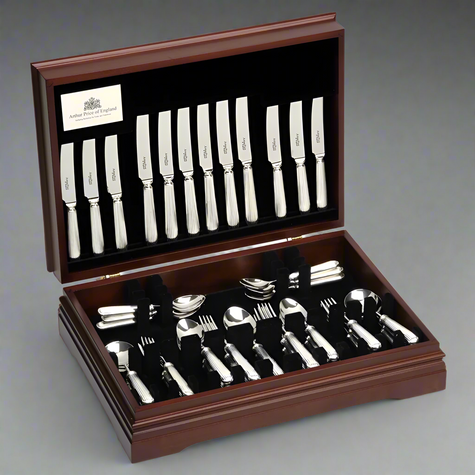
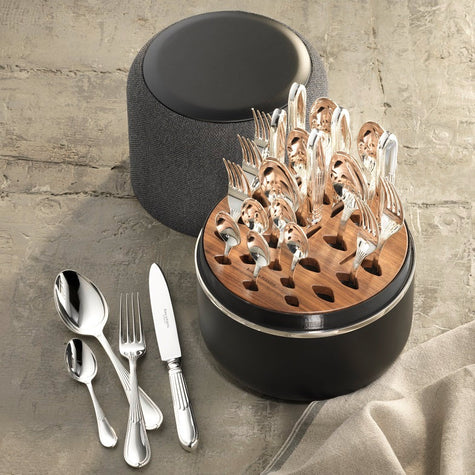
Silver plate is the natural choice for a formal table or a meaningful gift. A silver plate canteen presented in a fitted case — a pattern such as Robbe & Berking's Versailles or Christofle's Jardin d'Eden — carries a weight of occasion that stainless steel rarely matches. For wedding lists, silver anniversaries, or a set intended to be passed down, silver plate says something stainless steel does not.
Importantly, a beautifully designed 18/10 stainless set from Forge de Laguiole or Sknife makes a genuinely impressive gift for someone who will actually use it every day.
Frequently Asked Questions
Can silver plate cutlery go in the dishwasher? We recommend hand-washing silver plate cutlery. Dishwasher detergents and high heat accelerate wear on the silver coating and can cause discolouration, particularly around the tips and edges. Rinse promptly after use, dry by hand, and store in a lined canteen or anti-tarnish cloth.
Is stainless steel cutlery cheaper than silver plate? Not necessarily. Entry-level stainless steel sets are less expensive than silver plate, but premium 18/10 stainless from makers such as Robbe & Berking or Studio William can cost as much as — or more than — mid-range silver plate. Price reflects quality of construction and finish, not material alone.
What does 18/10 mean on stainless steel cutlery? 18/10 refers to the alloy composition: 18% chromium, which prevents corrosion, and 10% nickel, which adds brightness and hardness. It is the highest standard grade for cutlery and the one used in professional hospitality. Lower grades such as 18/0 contain no nickel and are noticeably less bright and resistant.
Can I buy individual silver plate pieces to replace ones I've lost? Yes. Lincoln House sells individual replacement pieces across hundreds of designs in both silver plate and stainless steel. There is no need to replace an entire set — call the team on 01458 258 458 and they will help you find the right match.
Which material is better for a wedding list? Silver plate is the more traditional choice for a wedding list and tends to feel more ceremonial as a gift. Stainless steel is the better choice if the couple will use the cutlery every day and prefer easy care. Many couples choose a silver plate set for formal occasions and a stainless steel set for everyday use — both approaches make complete sense.
Does silver plate tarnish? Yes. Silver plate will tarnish over time, particularly if stored in humid conditions or left unwashed after contact with foods high in sulphur (such as eggs). Regular use and prompt washing actually reduce tarnish; a quality silver polish restores the finish quickly when needed.
