



A bread and butter plate is a small side plate, typically 15–18 cm (6–7 inches) in diameter, placed to the upper left of the main place setting to hold a guest's bread roll, butter pat and any accompaniments throughout a meal.
Key Takeaways
- Standard bread and butter plates measure 15–18 cm (6–7 inches) in diameter — small enough to sit comfortably above the forks without crowding the place setting.
- They are positioned at the upper left of the place setting, above the forks, with a small butter knife laid horizontally across the top edge.
- Three main styles cover most settings: classic flat plates, coupe-style (rimless) plates and rimmed plates with a decorative border.
- In formal dining — including settings used by 5-star hotels and Michelin-starred restaurants — the bread plate is considered an essential piece, not an optional extra.
- A matching bread plate can be sourced individually; there is no need to replace a full service if one piece is lost or damaged.
What is a bread and butter plate?
A bread and butter plate is a small side plate dedicated to holding bread, rolls, butter and sometimes an amuse-bouche or small appetiser. It keeps bread off the tablecloth and off the main dinner plate, giving each guest a defined space for their bread course. In formal European table-setting tradition, it's been a standard piece since the late 19th century.
What size is a bread and butter plate?
The standard size is 15–18 cm (6–7 inches) in diameter. Most manufacturers produce them at 16 cm or 17 cm, which is large enough to hold a bread roll and a pat of butter side by side without looking cramped. Anything smaller becomes impractical; anything approaching 20 cm begins to overlap with the side plate category.
How does a bread and butter plate differ from a side plate?
A side plate typically measures 18–20 cm (7–8 inches) and serves a broader purpose — salad, cheese, a first course. A bread and butter plate is specifically proportioned for bread service. The distinction matters in formal settings where both pieces may appear on the table simultaneously.
Where does a bread and butter plate go on the table?
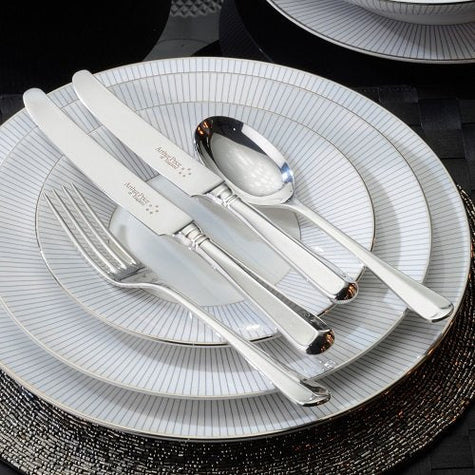
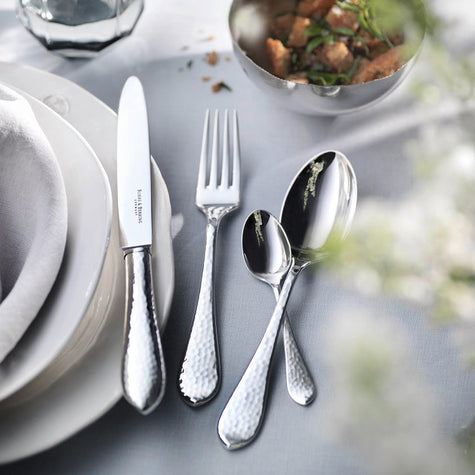
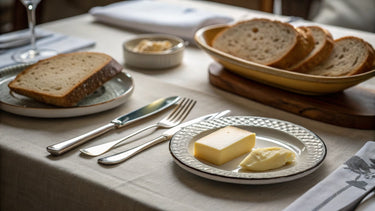
The bread and butter plate is placed to the upper left of the place setting, directly above the forks. The butter knife — a short, blunt-bladed knife — rests horizontally across the top of the plate, blade facing downward or inward. This positioning is consistent across British and European formal service.
A simple rule: left for bread, right for drinks. Glasses sit to the upper right; the bread plate to the upper left. This prevents the common confusion of reaching for a neighbour's roll at a shared table.
What styles of bread and butter plate are available?
| Style | Best for | Typical look | Consideration |
|---|---|---|---|
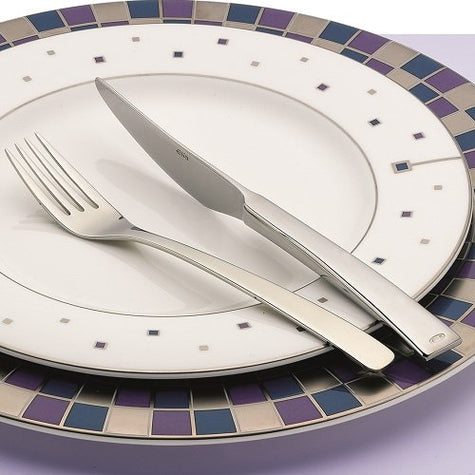
| Rimmed (traditional) | Formal dining, silver service | Decorative border, often with pattern | Pairs well with patterned dinner services |
| Coupe (rimless) | Contemporary restaurants, modern table settings | Clean edge, uninterrupted surface | Suits minimalist or Scandinavian-influenced settings |
| Flat with embossed detail | Everyday and semi-formal use | Subtle texture or edge detail | Versatile — works across casual and smarter occasions |
| Sterling silver or silver-plated | Formal entertaining, gifts | Lustrous, reflective surface | Requires occasional polishing; makes a lasting impression |
In our work with Lincoln House clients, we see consistent demand for both classic rimmed plates in silver plate and clean coupe styles in fine stainless steel — reflecting the split between traditional household entertaining and contemporary hospitality settings.
Do bread and butter plates come in sets, and can you buy them individually?
Most manufacturers sell bread and butter plates as part of a full dinner service — typically in sets of six or twelve. Individual pieces are also available, which matters when a single plate is chipped, lost or needed to complete a mismatched set. There's no obligation to purchase an entire service simply to add or replace one piece.
How to set a bread and butter plate correctly: step by step
- Place the dinner plate centrally in front of the chair, leaving at least 2.5 cm from the table edge.
- Set the forks to the left of the dinner plate in order of use, outermost first.
- Position the bread and butter plate above the forks, aligned with the top edge of the dinner plate.
- Lay the butter knife horizontally across the bread plate, blade facing the diner (inward), handle to the right.
- Ensure adequate spacing between the bread plate and the nearest glass — at least 2–3 cm of clear table between them.
Frequently Asked Questions
What is the correct size for a bread and butter plate? Standard bread and butter plates are 15–18 cm (6–7 inches) in diameter. The most common sizes from British and European manufacturers are 16 cm and 17 cm — large enough for a roll and butter, compact enough to sit neatly above the forks.
Is a bread and butter plate the same as a side plate? No. A side plate is typically 18–20 cm and used for salads, cheese or first courses. A bread and butter plate is smaller — 15–18 cm — and intended specifically for bread service throughout the meal.
Do you need a bread and butter plate for a formal dinner? Yes, in traditional British and European formal settings, a bread and butter plate is considered an essential part of the place setting. Hospitality venues, including 5-star hotels and Michelin-starred restaurants, include them as standard.
Where exactly does the bread plate go on the table? Above the forks, to the upper left of the place setting. A practical memory aid: bread is on the left, drinks are on the right.
Can you buy a single bread and butter plate to replace one that's broken? In most cases, yes. Many patterns are available as individual pieces rather than full sets only — meaning a chipped or lost plate can be replaced without purchasing an entire new service.
What material is best for bread and butter plates? It depends on the setting and the look you want. Silver-plated or sterling silver plates suit formal entertaining and make handsome gifts. Fine stainless steel and porcelain are practical for everyday use and commercial settings. Crucially, the plate should match — or at least harmonise with — the rest of the table service.
