


There's a certain magic to antique silver candlesticks. They're far more than just holders for candles; they are genuine pieces of history, capturing centuries of artistry, style, and social change in gleaming metal.
Collectors treasure these items because they offer a tangible link to the past. Each candlestick tells a quiet story of its time, whether it’s the handsome simplicity of the Georgian era, the elaborate detail of the Victorians, or the sleek lines of Art Deco design. Their true value is a combination of their beauty, how rare they are, and the fascinating stories hidden within their hallmarks.
A Legacy Illuminated by Candlelight
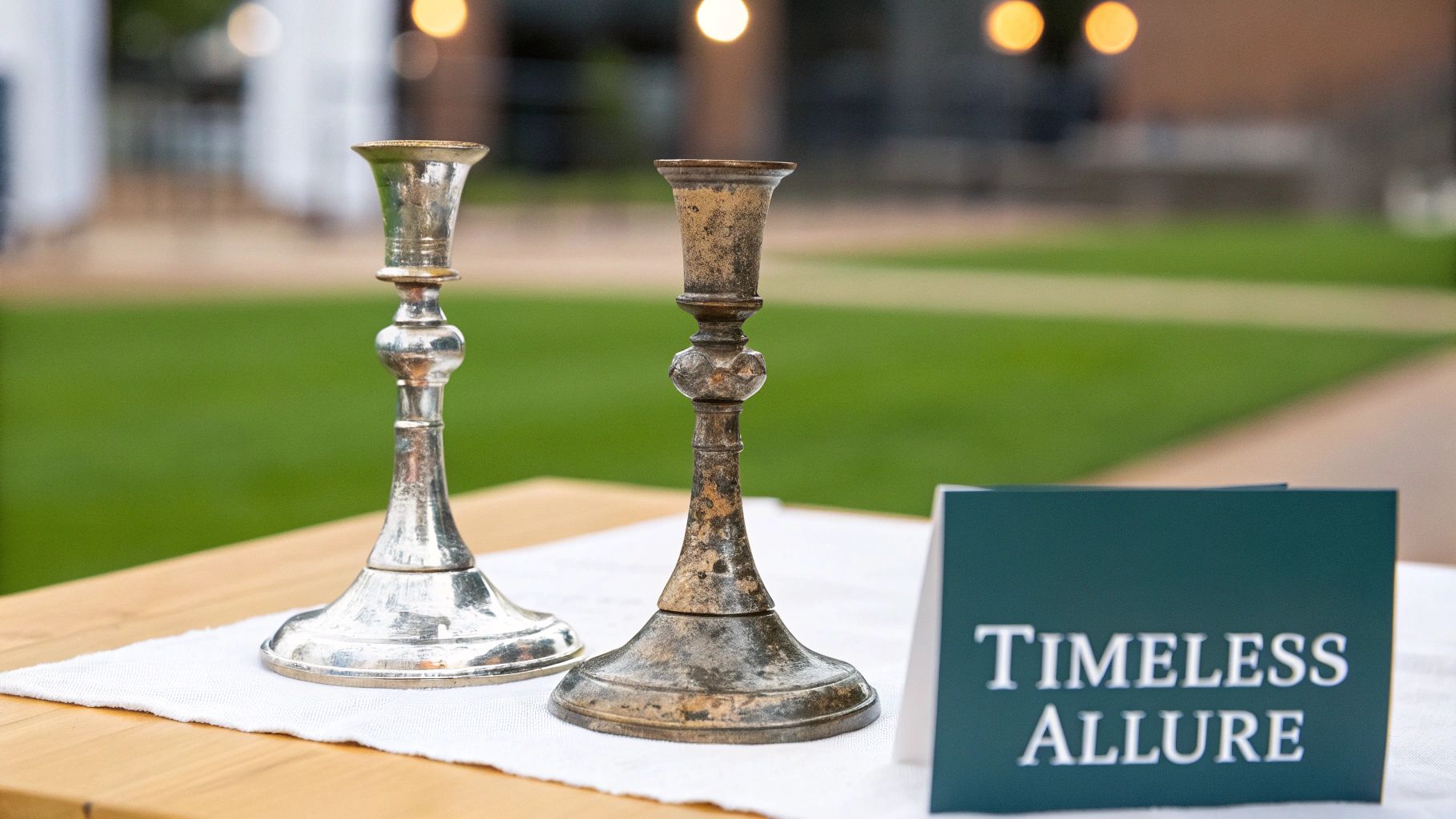
Long before electricity became a household staple, candlesticks were an absolute necessity, lighting up everything from grand dining rooms to quiet studies. What started as a purely practical object soon became a powerful symbol of wealth and social standing. The warm glow of candlelight reflecting off polished silver was a clear sign of a family's prosperity.
Today, these beautiful objects have found a new life. We don't need them for light anymore, but we cherish them for their timeless elegance and the rich history they represent. An antique silver candlestick is a testament to the master silversmith who crafted it, showcasing the unique design flair and intricate workmanship of a bygone era.
Why Collect Antique Silver Candlesticks?
The joy of collecting these pieces goes well beyond just how lovely they look. For many, it's about holding a piece of history in their hands – something that has been present for generations of family meals, conversations, and celebrations.
"Vintage pieces showcase craftsmanship through intricate engravings or elegant curves. Sterling silver offered timeless shimmer and prestige... a natural reaction between silver and sulfur-containing air."
This guide is here to walk you through the wonderful world of antique silver. Whether you're just starting your collection or you're an experienced enthusiast looking to add a touch of historical grace to your home, we'll cover everything you need to know.
-
Understanding the History: We'll trace the journey of design, from the understated elegance of the Georgian period to the ornate details loved by the Victorians.
-
Identifying Authenticity: You'll learn how to read the 'secret code' of hallmarks to discover a piece's maker, where it was made, and exactly when.
-
Appreciating Craftsmanship: We’ll explore what gives a piece its value, from the reputation of its maker to the quality of its construction and the character of its unique patina.
Think of each candlestick not just as silver, but as a small sculpture that has travelled through time, ready to add its story to your own.
A Journey Through Silver Candlestick Styles
Think of exploring antique silver candlesticks as a walk through history. Each period left its own distinct mark on these everyday objects, turning simple light sources into miniature sculptures that tell a story about the fashions, technologies, and social changes of their time.
To really get to grips with an antique candlestick, you need to understand the world it came from. The design isn't just for show; it's a timestamp. By learning to spot the unique character of each major style, you can start to read the history etched right into the silver.
The Elegant Restraint of the Georgian Era
The Georgian period (1714–1837) was all about balance, symmetry, and classical proportion. Picture the clean, grand lines of a stately country home – that same architectural elegance was shrunk down to sit on the dining table. Georgian silver candlesticks are prized for their clean lines and sophisticated, understated shapes.
These pieces often have strong, simple forms. Look for columns, baluster stems (shaped a bit like a vase), and octagonal or square bases with stepped detailing. Decoration was used sparingly and with great care; any engraving was there to highlight the shape, not hide it. The real focus was on the purity of the silver and the perfection of the silhouette.
Antique silver candlesticks have graced British tables since the 17th century, but this period truly cemented their role as a status symbol. By the Georgian era, these pieces became signs of serious wealth, with pairs often fetching high prices at UK auctions thanks to their rarity. You can explore a curated selection of historical pieces to see this craftsmanship firsthand.
The Ornate Grandeur of the Victorian Era
If Georgian style was about quiet confidence, the Victorian era (1837–1901) was a much louder, bolder statement. It was a time of prosperity and industrial power, and the decorative arts shouted it from the rooftops. Silversmiths used new manufacturing methods to create an explosion of elaborate and imaginative designs where more was definitely more.
Victorian antique silver candlesticks are usually much heavier and more decorative than their Georgian counterparts. Key things to look for include:
-
Naturalistic Motifs: Designs were pulled straight from nature, with flowers, leaves, vines, and even animals covering the silver.
-
Elaborate Decoration: Deeply chased or repoussé work often covered almost every inch of the surface.
-
Complex Shapes: Fluted columns, scrolled arms on candelabra, and highly detailed bases became the norm.
These candlesticks were designed to be dramatic showstoppers, catching the flickering candlelight across countless intricate surfaces. They captured the confident and romantic spirit of the age perfectly.
The Innovative Spirit of Art Nouveau and Art Deco
As the 20th century began, design took a sharp turn. The Art Nouveau period (circa 1890–1910) was a rebellion against Victorian fussiness, swapping it for organic, flowing lines. Candlesticks from this time look almost like they’re growing, with whiplash curves, asymmetrical shapes, and motifs like irises, lilies, and dragonflies. They feel dynamic and alive.
Right after, the Art Deco period (circa 1920–1940) swung things back towards order, but with a thoroughly modern feel. Inspired by the sleek lines of machinery and a new sense of speed, Art Deco candlesticks are bold and streamlined. You'll see strong geometric shapes, zig-zag patterns, and clean, polished surfaces. They perfectly capture the glamour and forward-looking optimism of the Jazz Age. Each style offers a completely different window into the past, just waiting to be discovered.
How to Read Hallmarks on Silver Candlesticks
Think of the tiny stamps on an antique silver candlestick as its passport. This cluster of symbols, known as hallmarks, is a secret code that tells you everything about its past. Learning to read them is perhaps the most rewarding skill you can develop as a collector; it transforms a beautiful object into a story you can read right from its base.
This system is one of the oldest forms of consumer protection in the world, a guarantee from an official assay office of the silver's purity. Without it, you're just guessing. Thankfully, cracking the code isn't as intimidating as it seems once you know what to look for.
The Four Essential Hallmarks
Most antique British sterling silver will have a set of four crucial marks, usually stamped on the base, but sometimes tucked away discreetly on the sconce (the cup that holds the candle). Each one reveals a different chapter of the candlestick's life.
-
The Town Mark: This tells you which city’s assay office tested and stamped the piece. A leopard’s head means London, an anchor signifies Birmingham, and a crown points to Sheffield.
-
The Lion Passant: This is the big one. Seeing this iconic walking lion guarantees the piece is sterling silver, meaning it’s made of at least 92.5% pure silver. It's your mark of true quality.
-
The Date Letter: A single letter of the alphabet, set within a specific shield shape and font, tells you the exact year it was hallmarked. These alphabets run in cycles, changing style each time they restart, which allows for incredibly precise dating.
-
The Maker's Mark: These are the initials of the silversmith or the company that crafted the item. Researching this mark can be thrilling, linking your candlestick to a celebrated artisan like Paul de Lamerie or the legendary female silversmith, Hester Bateman, which can dramatically increase its value and historical significance.
A complete set of crisp, clear hallmarks is what every collector hopes to find. It removes all doubt, offering a direct link back through the centuries to the very hands that made it.
Sterling Silver vs Silver Plate
One of the first things you need to figure out is whether you're looking at solid sterling silver or just silver plate. The difference in value is enormous, so spotting the distinction is a fundamental skill.
Sterling silver is an alloy made of 92.5% pure silver mixed with 7.5% of another metal (usually copper) to give it strength. Silver plate, on the other hand, is a much cheaper base metal—like copper or nickel—that has been given a wafer-thin coating of pure silver.
Hallmarks are your best guide here. A sterling piece will have the official marks we just discussed. A plated piece might be marked with letters like "EPNS" (Electro-Plated Nickel Silver) or have no marks at all.
To help you quickly tell the two apart, here's a simple breakdown.
Sterling Silver vs Silver Plate At a Glance
| Characteristic | Sterling Silver | Silver Plate |
|---|---|---|
| Markings | Official hallmarks (Lion Passant, etc.) | "EPNS", maker's marks, or no marks |
| Composition | 92.5% solid silver alloy | Base metal with a thin silver coating |
| Value | High intrinsic and collector value | Low intrinsic value; decorative only |
| Wear & Tear | Scratches remain silver-coloured | Wear exposes the different base metal |
| Colour | Deep, warm, lustrous glow | Can be overly bright, white, mirror-like |
| Weight | Feels dense and heavy for its size | Often feels surprisingly light |
Remember, these are general rules, but when combined with hallmark knowledge, they give you a powerful toolkit for identification.
Simple Identification Tips
What if the marks are worn or absent? You can still look for physical clues. These simple, non-destructive tests can give you a very good idea of what you’re holding.
-
Feel the Weight: Sterling silver is a dense metal. A solid silver candlestick should feel satisfyingly heavy in your hand. If it feels unexpectedly light for its size, your suspicions should turn towards silver plate. Just be aware that many candlesticks have weighted bases, so try to judge the weight of the column and sconce.
-
Check for Wear: Look very closely at the sharpest edges and most pronounced decorative details. Years of enthusiastic polishing can wear through the thin silver layer on a plated item, revealing a different coloured metal underneath—often a yellowish brass or a dull grey nickel. This is a dead giveaway.
-
Analyse the Colour: With a bit of practice, you’ll start to notice the subtle difference in colour. Sterling silver has a unique lustre—a deep, slightly warm glow that feels rich. Silver plate can sometimes look a bit too bright, almost stark white, with a more reflective, mirror-like finish.
By combining a little knowledge of hallmarks with these hands-on observations, you can approach any piece of antique silver with confidence, ready to uncover its story and truly understand its quality and character.
What Determines the Value of Silver Candlesticks
Ever wondered why one pair of antique silver candlesticks might be worth a few hundred pounds, while a seemingly identical pair fetches thousands? The answer has very little to do with the simple weight of the silver. Instead, the true value is a fascinating mix of history, artistry, condition, and rarity, with every piece telling its own unique story.
Getting to grips with these factors is what separates a casual admirer from a serious collector. It’s how you learn to see beyond the shine and appreciate the historical and financial worth of a piece. Think of it as learning the language of antiques, where every detail, from the maker’s name to the faintest scratch, adds to the narrative.
The Maker and the Mark
First and foremost, the maker’s mark is often the single most important factor. Just like with fine art, the silversmith's reputation plays a huge part in determining value. A candlestick crafted by a celebrated artisan like Paul de Lamerie or Hester Bateman will always be more desirable than one from an unknown workshop. Their names are a hallmark of exceptional quality and design in their own right.
Just as crucial is the clarity of the hallmarks themselves. A full set of crisp, legible marks clearly identifying the maker, town, date, and sterling guarantee is what every collector hopes to find. If the marks are rubbed from over-polishing or were poorly struck to begin with, it creates uncertainty. This can drag down the value, even if the candlestick itself is in otherwise good shape.
A maker's mark is like an artist's signature, tying the piece directly to a specific craftsman in history. A candlestick with a clear mark from a renowned silversmith isn’t just an object; it’s a documented piece of art with a solid provenance.
Condition and Originality
Any appraiser will look at the condition of an antique silver candlestick with a forensic eye. They are piecing together its journey through time, and originality is everything.
Key things to look for include:
-
Original Components: Are the bobeches (the removable wax-catching dishes) original? Replacements, even if they are from the correct period, will lower the value.
-
Signs of Repair: Check carefully for solder marks around the joints or filled-in dents. While a professional repair is better than leaving serious damage, an untouched, original piece will always command a higher price.
-
Surface Wear: Dents, deep scratches, and any warping will certainly detract from the value. Minor signs of use are to be expected and often add character, but major damage is a red flag.
-
Symmetry: When buying a pair, it's vital to confirm they are a true pair. Look for perfectly matching hallmarks, consistent wear patterns, and identical dimensions and decorative details.
Understanding Patina
One of the most misunderstood yet vital concepts for any silver collector is patina. Patina is absolutely not the same thing as tarnish. Tarnish is simply the blackish layer of silver sulphide that forms from exposure to air and can be polished away.
Patina, on the other hand, is the beautiful, soft sheen that develops over hundreds of years from careful handling and polishing. It’s created by thousands of microscopic scratches on the surface, which build up to form a subtle grey lustre that settles into the crevices of the design. This effect accentuates the fine details and gives the piece a depth and warmth that brand new silver completely lacks.
This delicate finish is impossible to fake and is seen as a badge of honour—proof of a candlestick’s age and authenticity. Aggressive over-polishing, especially with harsh abrasives, can strip this valuable patina away, permanently destroying a huge part of the piece’s character and its financial worth. Learning to spot this gentle, desirable glow is a skill that truly sharpens a collector’s eye. A rich, undisturbed patina is a clear sign of a well-loved and historically important piece.
A Practical Guide to Buying Your First Piece
Taking the plunge and buying your first antique silver candlestick is a genuinely exciting moment. But with so many places to look, it can feel a little daunting. The key is to have a clear plan, which will help make sure your first purchase is something you’ll not only love but that’s also a sound investment.
Where you decide to buy from really shapes the whole experience. Each option has its own distinct character, with its own pros and cons.
-
Reputable Dealers: These specialists are a fantastic starting point. They offer beautifully curated collections and bring a wealth of knowledge. You'll get guarantees of authenticity and often hear the story behind a piece, making it a very safe and educational way to begin your collection.
-
Auction Houses: Auctions can be thrilling. You might just find a rare gem at a fantastic price. Be aware, though, that the fast pace and the added "buyer's premium" can be a bit much for a newcomer. Always make time to inspect the items properly during the viewing days beforehand.
-
Antique Fairs and Markets: This is where the real treasure hunt happens! You'll find an amazing mix of items and have the chance to chat and haggle with sellers. The quality can be all over the place, so this is where your growing knowledge of hallmarks and condition really comes into play.
Essential Questions to Ask Any Seller
No matter where you're shopping, coming prepared with the right questions is your single best tool. A good, honest seller will be more than happy to answer them.
Think of it as a little interview for the candlestick itself. Before you commit, make a point of asking:
-
Provenance: Can you tell me anything about the history of this piece? Knowing a little about who owned it or where it's been adds so much character.
-
Condition Report: Are there any repairs, dents, or major signs of wear I should know about? Be specific – ask if the bobeches (the little wax-catching dishes) are the originals.
-
Hallmarks: Are the hallmarks crisp and easy to read? If they're a bit rubbed, how did you attribute the candlestick to its maker and date?
These questions help you see beyond the initial beauty and understand the historical integrity of the piece you're considering.
A purchase from a reputable source should always come with a written guarantee of authenticity. This piece of paper is your assurance that the item is exactly what the seller claims it is in terms of age, material, and origin. Don't even consider buying without one.
Look for Guarantees and Fair Policies
Finally, always get clarity on the seller's policies before you hand over any money. A professional dealer should have a straightforward return policy. This gives you a vital window to get the piece appraised by an independent expert if you wish, giving you complete peace of mind with your purchase.
It also helps to understand the market. For instance, Victorian silver candlesticks, made between 1837–1901, are often seen as a high point of British silversmithing. Huge numbers were produced as cities like Sheffield and Birmingham became world leaders in manufacturing. Their popularity has never waned, making them a common and fantastic choice for collectors and designers looking to create a grand dining table. You can get a better sense of what the professionals look for by exploring how experts value antique silver candlesticks.
By choosing where you buy with care, asking the right questions, and insisting on a guarantee, you turn what could be a risky venture into a truly rewarding one. This thoughtful approach will ensure your first piece of antique silver is something you'll treasure for many years.
Caring For and Styling Your Antique Silver
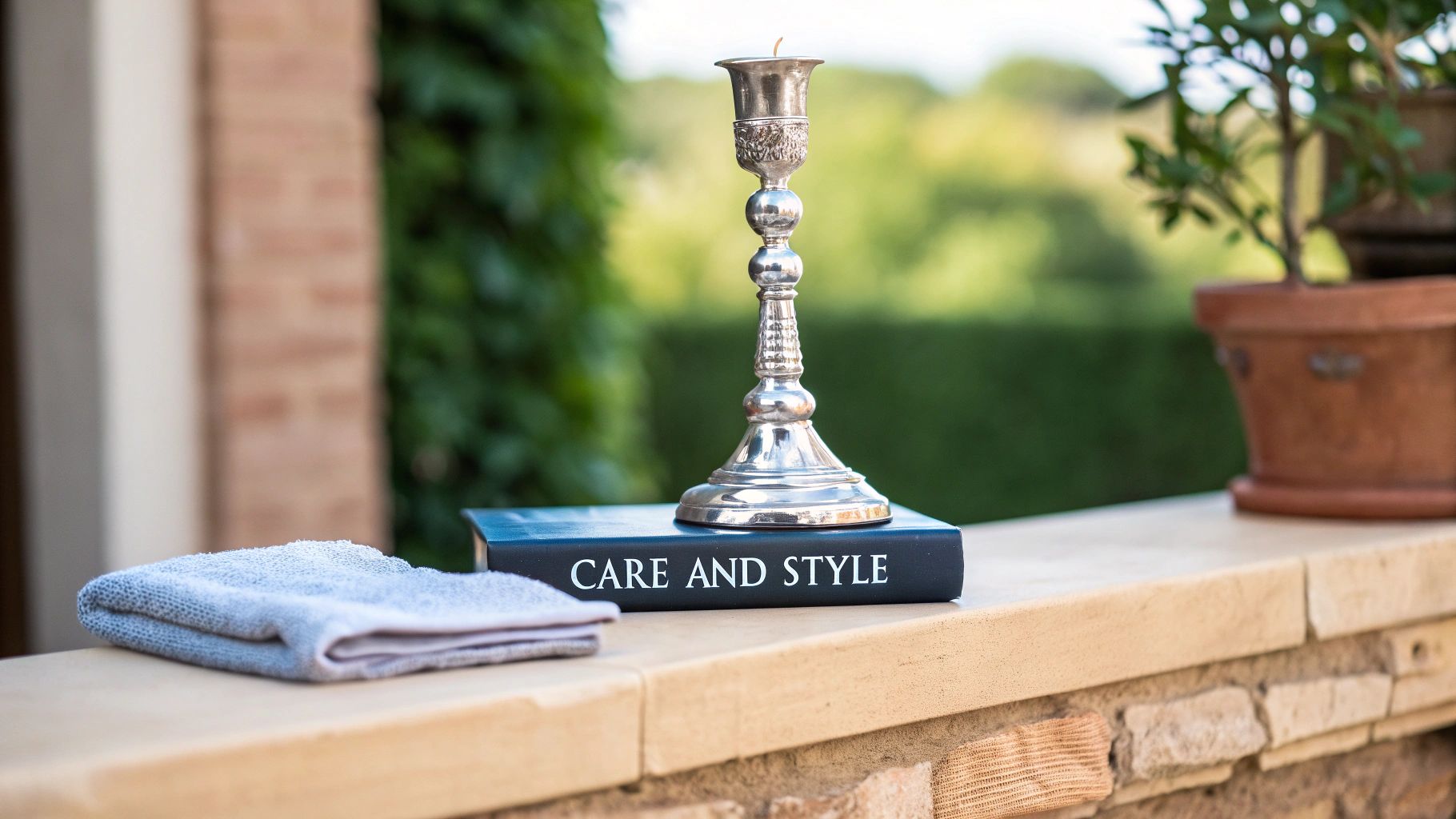
When you own a pair of antique silver candlesticks, you become the current custodian of a little piece of history. Looking after them properly is about more than just keeping them looking good; it’s about preserving their integrity and value for the next generation. This means using a gentle touch when cleaning and being thoughtful about how you integrate their timeless beauty into your home.
The golden rule is to be gentle. Harsh chemicals or abrasive cloths can easily strip away the precious patina that has taken centuries to form, permanently damaging the candlestick's unique character. Think of it as preservation, not just cleaning.
Gentle Cleaning and Preservation
The aim of cleaning is simply to remove tarnish—that dark layer caused by sulphur in the air—while carefully protecting the delicate patina underneath. Your first line of defence is regular, light dusting with a soft microfibre cloth. This simple step prevents dust from trapping moisture against the surface and speeding up the tarnishing process.
When a proper polish is needed, always reach for a high-quality product made specifically for antique silver. Steer clear of "dip" polishes; they're far too aggressive and can remove the desirable, darker accents settled in the crevices of an ornate design, which give the piece its depth.
Here are a few simple steps for polishing them safely:
-
Apply Polish: Using a soft, clean cloth, apply a small amount of polish. Rub gently in straight, back-and-forth motions, not in circles, as this can create fine swirl marks.
-
Clean Crevices: For intricate patterns, a cotton bud dipped in a little polish is perfect for getting into tight spots without risking scratches.
-
Rinse and Dry: Give the candlestick a quick rinse under warm water and immediately pat it completely dry with a lint-free cloth to avoid water spots.
A quick tip: the natural oils on your hands can accelerate tarnishing. It’s a good idea to wear cotton gloves when handling your silver for cleaning or arranging a display. It will help keep them looking pristine for longer.
Integrating Antiques into Modern Decor
Styling antique silver candlesticks is all about creating a wonderful contrast between the old and the new. Their classic elegance can bring a sense of history and sophistication to even the most contemporary rooms. Don’t feel you have to save them for formal dinners; let their character shine every day.
Here are a few ideas to bring their glow into your home:
-
Dining Table Centrepiece: This is their classic home. A pair of tall Georgian or ornate Victorian candlesticks can anchor a dining table, creating a real sense of occasion for any meal.
-
Mantelpiece Magic: For a look of balanced, traditional elegance, arrange a symmetrical pair on either side of a mantelpiece. Or, for a more modern, eclectic feel, group several candlesticks of varying heights and styles together.
-
Unexpected Accents: Try placing a single, striking candlestick on a stack of books on a side table or console. This turns it into a sculptural object, adding a touch of metallic warmth that draws the eye.
The beauty of antique silver is its versatility. Whether your home is minimalist or maximalist, these pieces connect the present to the past, adding a layer of soul and story that brand-new items simply can’t match.
A Few Common Questions About Silver Candlesticks
When you start collecting antique silver, you'll find questions pop up all the time. It’s all part of the fun. Here are a few of the most common queries we hear from new collectors, with some straightforward answers to help you on your way.
Getting your head around these details will do more than just help you look after your pieces; it will train your eye for real quality and authenticity.
How Often Should I Polish My Silver Candlesticks?
The golden rule here is little and often, rather than a harsh, infrequent scrub. Give them a light dust every week with a soft microfibre cloth. This simple step stops dust and pollutants from settling on the silver and starting the tarnishing process.
You should only need to do a full polish every few months, or whenever you notice that lovely warm shine starting to look a bit dull. Be careful not to overdo it. Polishing too much actually removes a tiny layer of silver each time, wearing away the fine details and the precious patina that gives old silver its character and value.
A good rule of thumb: polish them when they need it, not just because the calendar says so. It’s the best way to preserve the history and integrity of your antique silver for years to come.
What Does It Mean If a Candlestick Has a Weighted Base?
A weighted base is very common, especially on candlesticks made from the late 19th century onwards. It simply means the hollow base has been filled with another material – usually pitch, resin, or plaster – to give it some heft and stop it from tipping over so easily.
It’s not necessarily a mark of poor quality, but you do need to know what you're looking at. The candlestick isn't solid sterling silver from top to bottom. The silver outside is genuine, but the total weight you feel isn't all silver. These pieces are usually marked "weighted" or "sterling weighted" on the base to make this clear.
Can I Tell If a Piece Is a Reproduction?
Spotting a clever reproduction takes a bit of practice, but there are a few tell-tale signs to watch out for.
-
Mushy Details: Genuine antique candlesticks, even with some wear, have crisp, well-defined decoration. Reproductions often look soft or blurry, as if they’ve been cast from a mould of an original piece, losing all the sharpness.
-
Suspiciously Perfect Hallmarks: While you want clear hallmarks, marks that look a bit too perfect, machine-stamped, or use modern-looking fonts can be a red flag. Authentic marks often have a slightly handmade feel to them.
-
Unusual Weight or Feel: A reproduction might feel too light or just not properly balanced in your hand. You have to trust your instincts here; seasoned collectors get a real feel for the dense, solid quality of proper sterling silver.
-
Lack of Patina: A true antique has a soft, deep lustre that has built up over hundreds of years. Reproductions often have a flat, lifeless shine or a fake "antiquing" finish that looks uneven and a bit like it's been painted on.
At Lincoln House Cutlery, we believe that every piece of tableware should tell a story. Explore our curated collection of contemporary silver candlesticks to find the perfect historical accent for your home. Begin your collecting journey with us today at https://www.cutlery.uk.com/collections/candlesticks-candelabra
