


The right tongs for salad are much more than just a way to get leaves from bowl to plate. They’re a vital part of the dining experience, turning a simple dish into a beautifully presented centrepiece. Choosing the correct pair shows a host’s attention to detail and makes the simple act of serving a pleasure for everyone at the table.
Why Your Salad Deserves the Right Serving Utensils
A beautifully made salad, full of fresh colours and textures, is an invitation to enjoy a meal. Too often, though, the experience is let down by clumsy or mismatched serving utensils. The right pair of salad tongs, however, can elevate the entire presentation, transforming a routine task into a moment of grace and hospitality. It’s not just about function; it’s about the feeling of quality in your hands.
Think of it this way: you wouldn't serve a fine wine in a paper cup. By the same token, a thoughtfully prepared salad deserves utensils that reflect its quality. The weight, balance, and look of well-designed tongs all contribute to the meal's atmosphere. They signal care and a commitment to creating a superior dining experience for your guests.
More Than Just a Dish
The humble salad has truly become a cornerstone of modern British dining. Today, the UK’s market for chilled prepared salads and vegetables is a billion-pound industry, with spending more than doubling since 2008. Salads now feature on an impressive 36% of all restaurant menus, a testament to their central role in our food culture. This rise in popularity makes having the proper serving ware more important than ever. You can learn more about the growth of the UK's salad market and see how dining trends are evolving.
Choosing your serving utensils is an investment in hospitality. It’s a subtle but powerful way to show your guests that their comfort and enjoyment are your top priorities, from the first course to the last.
This attention to detail isn’t just for formal events. Even a casual family meal feels more special when presented with care. The simple act of using elegant, well-balanced tongs can make everyday dining feel a little more refined and intentional. It’s these small touches that create lasting impressions and turn a simple meal into a memorable occasion.
Choosing the Best Material for Your Salad Tongs
Selecting the material for your salad tongs is a bit like choosing the right fabric for a bespoke suit; each option brings its own distinct character, feel, and purpose to the table. This choice influences not just the look of your setting, but also the longevity of the piece and the care it will require. The material of your tongs for salad really does set the tone, whether for a grand formal dinner or a relaxed weekend lunch.
It often comes down to finding the right balance between beauty, practicality, and the nature of the occasion. The timeless lustre of silver, for instance, is perfect for celebratory events, while the robust, hard-wearing nature of stainless steel is ideal for frequent, everyday use. Let’s explore the most popular materials to help you find the perfect match for your collection.
Sterling Silver and Silver Plate
Sterling silver is, without a doubt, the pinnacle of luxury tableware. Made of 92.5% pure silver, it has a unique warmth and brilliance that no other material can quite replicate. These tongs are investment pieces, often becoming cherished family heirlooms that are passed down through the generations. They are best reserved for formal dining, where their elegance can truly shine.
For a similar aesthetic at a more accessible price point, silver plate is an excellent alternative. A thin layer of pure silver is expertly bonded over a base metal, creating a radiant finish that beautifully mirrors the look of sterling silver. It gives you the visual impact needed for special occasions without the same level of investment, making it an incredibly popular choice.
This simple decision tree can help guide your choice based on the formality of your event.
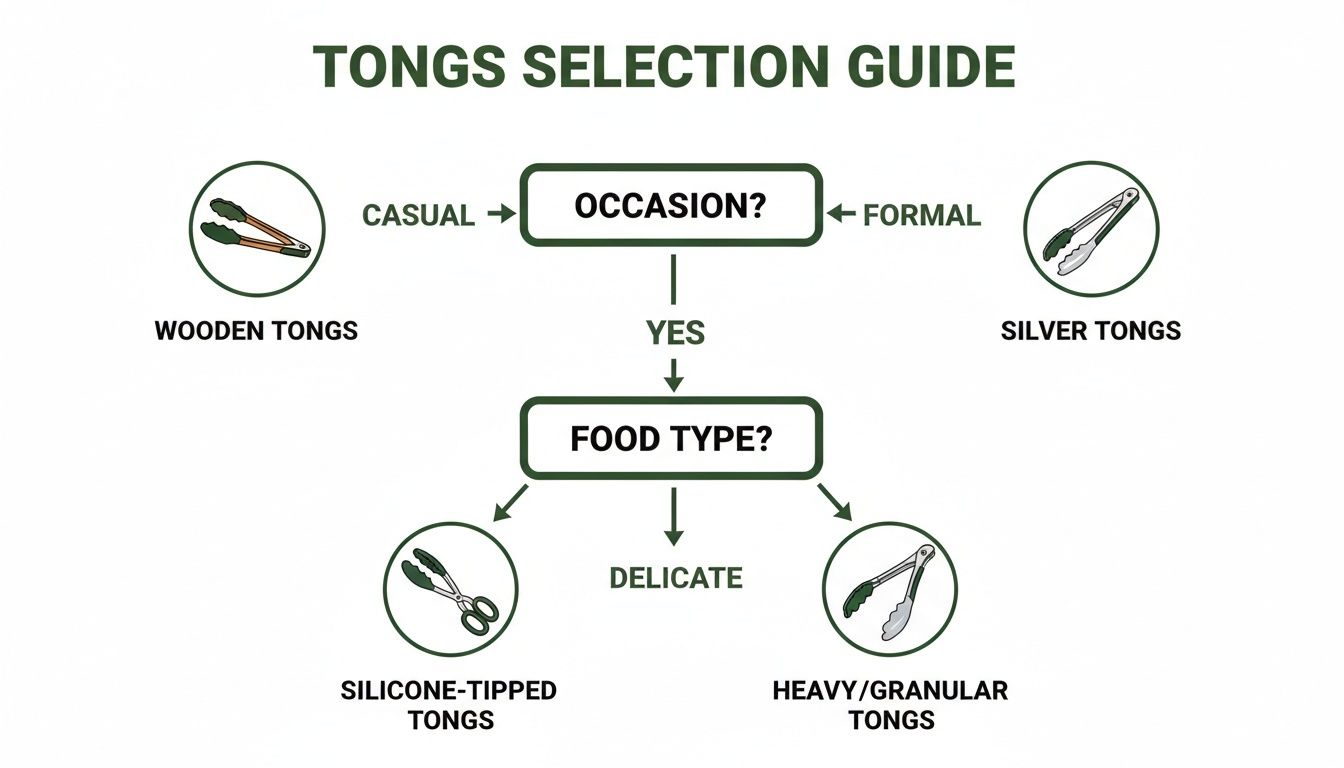
As the guide shows, the occasion is often the primary factor, pointing you towards the rustic charm of wood for casual meals or the refined elegance of silver for more formal gatherings.
Stainless Steel
When it comes to durability and modern appeal, stainless steel is a superb choice. High-quality 18/10 stainless steel (which contains 18% chromium and 10% nickel) is exceptionally resistant to rust, corrosion, and staining, holding up beautifully even against acidic vinaigrettes. This makes it a wonderfully practical option for everything from daily meals to stylish dinner parties.
Stainless steel tongs also come in a variety of finishes, allowing you to match them to your personal style:
- Polished Finish: A classic, mirror-like shine that offers a brilliant, timeless look.
- Satin or Brushed Finish: A more muted, textured appearance that cleverly hides fingerprints and lends a contemporary feel.
The versatility and low-maintenance nature of stainless steel make it a cornerstone of many modern cutlery collections.
Wood and Bamboo
Wood and bamboo tongs bring a natural, rustic warmth to the dining table. They are perfect for casual get-togethers, outdoor meals, and serving salads with a more organic feel. These materials are lightweight and, importantly, won't scratch your delicate glass or ceramic bowls.
When choosing a material, always consider its weight and feel in your hand. The reassuring heft of sterling silver conveys tradition, while the lightness of bamboo suggests a more relaxed, informal approach to dining.
It is worth noting, however, that wood and bamboo require a little more careful maintenance. They should never be soaked in water or put in a dishwasher, as this can cause them to crack or warp over time. A regular oiling will keep them looking their best and ensure they last for many meals to come.
To make the decision clearer, here is a simple guide comparing the key attributes of each material.
Salad Tong Material Comparison Guide
| Material | Key Characteristics | Ideal For | Care Level |
|---|---|---|---|
| Sterling Silver | Unmatched lustre, substantial weight, develops a patina over time. The ultimate luxury. | Formal dinners, weddings, celebratory events, and as a family heirloom. | High |
| Silver Plate | The look and feel of silver at a more accessible price. Bright, reflective finish. | Special occasions, formal gatherings, and elevating everyday dining. | Medium |
| Stainless Steel | Highly durable, resistant to rust and stains, available in polished or satin finishes. | Everyday use, modern table settings, and entertaining without the fuss. | Low |
| Wood & Bamboo | Natural, warm aesthetic, lightweight, and won't scratch bowls. | Casual dining, outdoor meals, and serving rustic or organic-style salads. | Medium |
Each material offers a unique way to present your culinary creations, allowing you to tailor your tablescape perfectly to the moment.
Matching Tongs with Your Table and Occasion
Choosing the right tongs for salad is about more than just function; it's about creating a sense of harmony at the table. When every element feels intentional and connected, your serving utensils complement the style of your dinnerware and the spirit of the event. A cohesive tablescape makes a quiet but powerful statement.
Think of it as accessorising an outfit. You wouldn't wear the same jewellery with a formal gown as you would with a casual summer dress. Your choice of tongs should reflect the setting in the same way. These small details are what pull the entire look together, showing a real thoughtfulness and a keen eye for design. It’s how you create a truly memorable dining experience.
Formal Dining and Celebrations
For formal events like weddings, anniversary dinners, or sophisticated holiday meals, elegance is paramount. This is where polished sterling silver or high-quality silver-plated tongs truly shine. Their brilliant, reflective surfaces pair beautifully with classic fine bone china and sparkling crystal glassware.
Picture a traditional table set with ornate porcelain plates. A pair of classic, polished silver tongs not only rises to the importance of the occasion but also enhances the perceived quality of the entire meal. For a more modern formal setting with minimalist dinnerware, sleek stainless steel tongs with a mirror finish provide a striking, clean look that feels both contemporary and refined.
A well-chosen pair of salad tongs should feel like a natural extension of your cutlery pattern. It shouldn’t compete for attention but rather complete the visual story you are telling with your tablescape.
Casual Gatherings and Everyday Meals
When the occasion is more relaxed—a weekend brunch, a dinner party with friends, or a family lunch—you have more freedom to play with textures and materials. Brushed or satin-finish stainless steel tongs are a fantastic choice here. Practical and stylish, they pair wonderfully with modern stoneware or rustic earthenware. Their muted lustre is great for hiding fingerprints while adding a touch of understated chic.
The growing culture around salads in the UK means we're serving them more often, making the right tools essential. In fact, the UK salad dressing market is projected to reach USD 1,305.09 million by 2032, a clear sign of our love for healthy, convenient meals. This trend highlights the need for serving utensils that are both beautiful and durable enough for regular use. You can explore more about this growing market trend here.
For a truly informal or rustic aesthetic, wooden or bamboo tongs are a perfect fit. They bring a natural warmth that works beautifully with casual pottery, outdoor settings, and hearty, farm-to-table style salads. They’re also lightweight and gentle, so you won’t have to worry about scratching your favourite serving bowls. By matching your tongs to the tone of the meal, you ensure every last detail contributes to a welcoming and beautifully presented table.
Understanding How Size and Style Impact Function
Beyond their material beauty, it’s the practical design of salad tongs that makes serving feel effortless. The ergonomics of a pair of tongs for salad will determine how easily you and your guests can serve, making sure the process is as graceful as the utensils themselves. Really, choosing the right size and style is all about thinking ahead to what the dish needs.
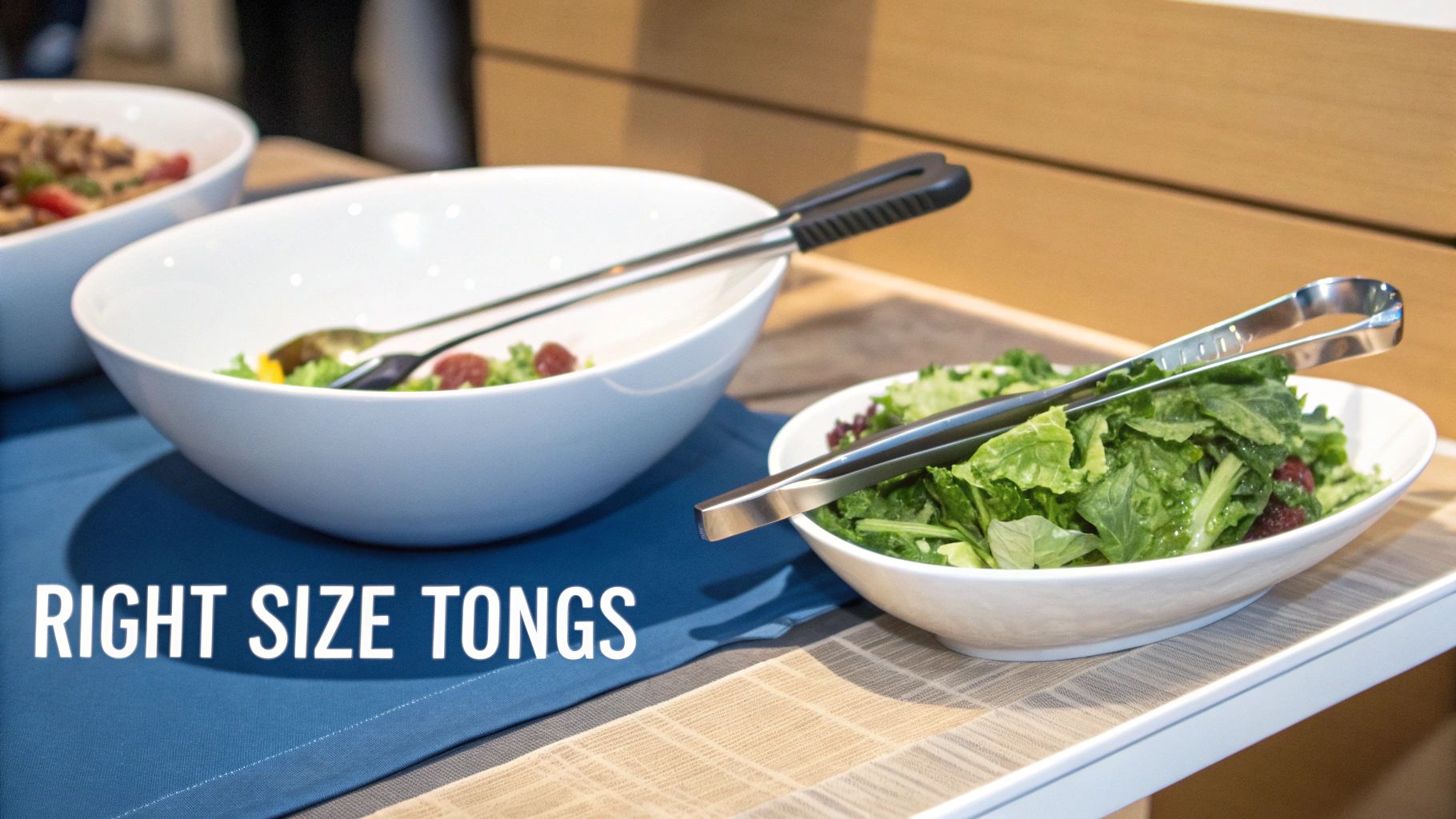
The length of your tongs, for instance, is a small detail that makes a big difference. For those deep, generous salad bowls, long-handled servers are a must. They let you reach right to the bottom to toss every ingredient properly, all without your hands or cuffs touching the salad or dressing – a subtle but important part of table etiquette and hygiene. As a good rule of thumb, aim for tongs that are about two-thirds the diameter of your serving bowl.
Matching Tongs to the Salad Type
It stands to reason that different salads call for different tools. Delicate, leafy green salads, like a simple mix of spinach and strawberry, need a gentle touch to avoid bruising the leaves. Heavier, more substantial salads, on the other hand, require a more robust approach.
Think about these common situations:
- For Leafy Greens: Your classic two-piece server sets—a large fork and spoon—are perfect here. They give you brilliant control for lightly tossing vinaigrettes through tender leaves and serving with precision.
- For Hearty Salads: When you're serving a substantial pasta salad, a potato salad, or a dense chopped salad, shorter and sturdier tongs are far better. Their solid build gives you the leverage needed to scoop and serve heavier portions without making a mess.
Getting this right is key to flawless presentation, preventing the heavier bits from being abandoned at the bottom of the bowl.
Classic Servers vs. Integrated Tongs
The mechanics of the tongs also play a big part in how they perform. The decision between a traditional two-piece set and a single, integrated pair often comes down to personal taste and what the serving situation calls for.
A two-piece set, often called salad servers, offers unmatched versatility. You can use the spoon and fork together to gently cradle delicate ingredients, or just use the spoon to scoop up salads with lots of dressing and smaller components. This method is often favoured in formal dining for its classic elegance and the control it offers.
Think like a professional host: the goal is to choose tongs that not only look beautiful but also perform flawlessly, making the act of serving feel intuitive and effortless for everyone at the table.
In contrast, integrated or scissor-style tongs offer the convenience of one-handed use. They are excellent for quick, efficient serving at a buffet or a more casual get-together. While they might offer a little less precision for tossing than a two-piece set, their sheer ease of use is a clear advantage in many settings. By understanding these functional differences, you can choose serving tongs that are perfectly suited to both the salad and the occasion.
The Art of Serving Salad with Proper Etiquette
Serving a salad with a touch of grace is a skill that elevates any meal. It transforms a simple course into a display of refined hospitality, and the way you handle the tongs for salad speaks volumes. It’s all about making the process feel both effortless and elegant for your guests.
When using a classic two-piece server set, the trick is to hold the spoon in your right hand and the fork in your left. Use them together in a gentle pincer-like motion. The spoon slides underneath to support the weight, while the fork rests on top to secure everything. This method gives you wonderful control, preventing delicate leaves or toppings from escaping onto the table.
At the Table Confidence
Tossing a salad right at the table can be a lovely touch, but it does require a bit of care. Gently lift ingredients from the bottom of the bowl to the top, folding them over rather than stirring as you would a pot of soup. This simple technique prevents you from bruising tender greens and, crucially, stops the dressing from splattering.
When it’s time to serve yourself from a communal bowl, the etiquette is wonderfully straightforward.
- Use the Provided Utensils: It goes without saying, but always use the serving tongs or spoons, never your personal fork.
- Take a Modest Portion: Serve yourself a reasonable amount, making sure there is plenty left for everyone else at the table.
- Keep it Tidy: Try to avoid digging around for your favourite bits; simply take a cross-section of the salad as it's presented.
Once you've served yourself, where you place the tongs is key. Rest them neatly back inside the bowl, with the handles pointing towards the next person. This small gesture makes it easy for them to pick them up.
This little detail also prevents dressing from dripping onto your tablecloth and maintains the clean, tidy appearance of your tablescape. Mastering these simple points of etiquette ensures that every part of your meal, right down to the salad, is handled with poise and confidence.
How to Care for Your Salad Tongs
Investing in a beautiful pair of tongs for salad is one thing, but ensuring they grace your table for decades to come requires a little care. The right maintenance will preserve their function and finish, keeping them ready for any occasion. Each material, from gleaming silver to warm, rustic wood, has its own simple needs.
With salads becoming a staple in British homes, proper care is more important than ever. The UK's packaged salad market is growing at a CAGR of 7.4%, meaning our serving utensils are seeing plenty of use. Discover more insights about the UK salad market and see why a little upkeep goes a long way.
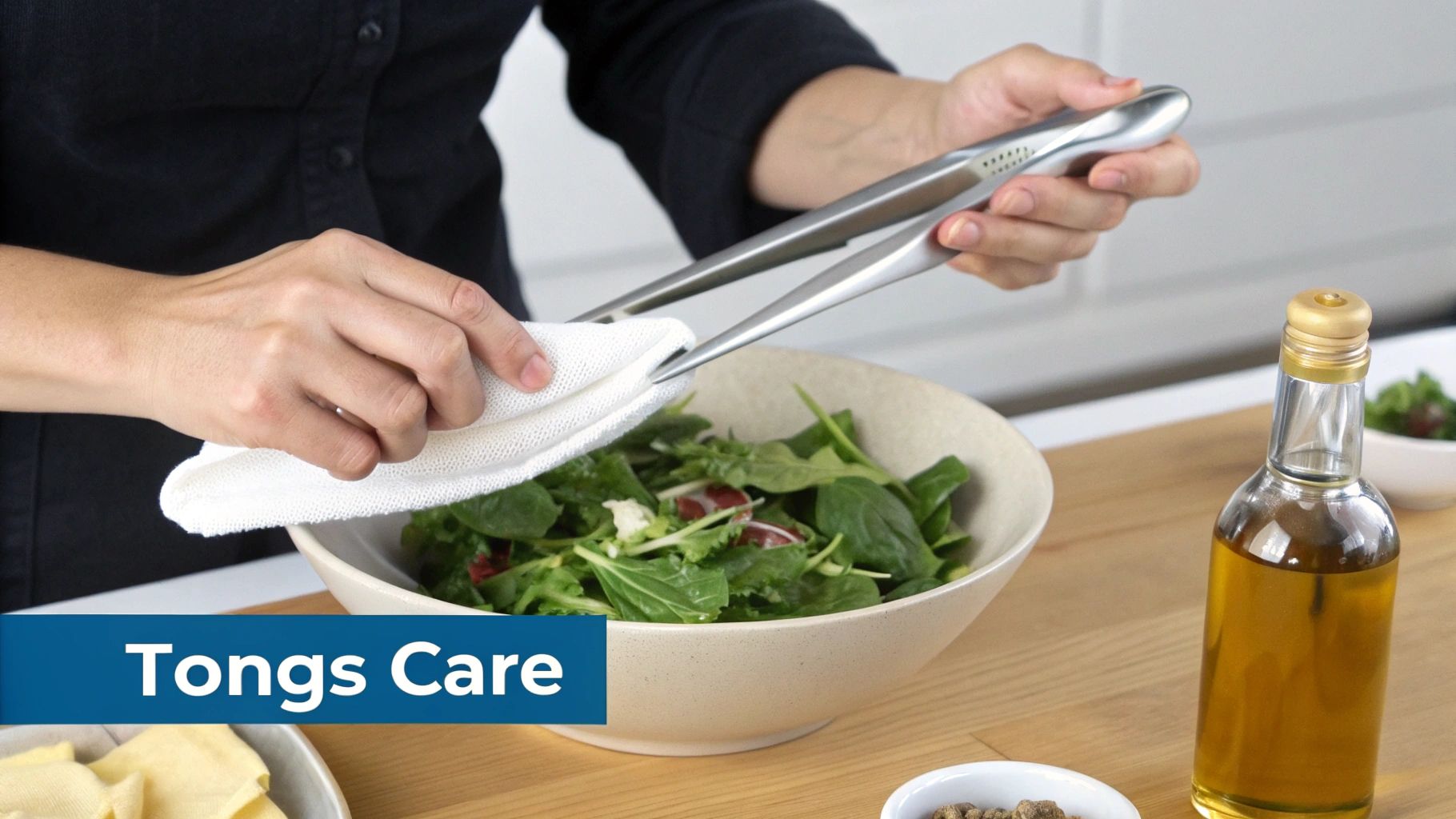
This attention to detail ensures your pieces are always at their best, whether it's for a quiet family dinner or a grand celebration.
Caring for Silver and Silver Plate
Sterling silver and silver-plated tongs need a gentle touch to prevent tarnish – that familiar darkening that occurs when silver reacts with the air. The secret is simply prompt and careful cleaning.
- Hand Wash Only: Always wash silver tongs by hand in warm, soapy water as soon as you're done. Acidic dressings can speed up the tarnishing process, so don't let them sit.
- Dry Immediately: Use a soft, lint-free cloth to dry them completely. Leaving them to air-dry is a sure way to get water spots and encourage tarnish.
- Polish Regularly: A quick buff with a high-quality silver polishing cloth will maintain their brilliant lustre. It's far better to polish gently and often than to tackle heavy tarnish later.
When it comes to storage, keep your silver pieces tucked away in a felt-lined drawer or a special anti-tarnish bag to shield them from air and moisture.
Think of tarnish as dust on a fine piece of furniture. A gentle, regular wipe-down maintains its beauty, whereas letting it build up requires much more effort to restore its original lustre.
Maintaining Stainless Steel and Wood
Stainless steel tongs are wonderfully low-maintenance. Most are perfectly safe for the dishwasher, though for a truly flawless finish, we always recommend hand-drying to prevent water spots and keep that pristine shine.
Wooden tongs, on the other hand, require a different approach. Never soak them or put them in a dishwasher, as this can cause the wood to swell, warp, and crack. A simple wash by hand with mild soap and an immediate dry is all they need.
To keep the wood from drying out, periodically rub it with a food-safe mineral oil. This small step nourishes the wood, brings out its natural grain, and prevents splitting, ensuring your tongs remain a beautiful, rustic addition to your collection for years.
Your Questions About Salad Tongs Answered
Even the most experienced host can have questions when it comes to choosing the perfect tableware. When you’re selecting tongs for salad, it’s the small details that often make the biggest difference, both in how your table looks and how well the utensils work.
Here, we'll answer some of the most common queries we receive. Our goal is to help you choose and use your serving pieces with complete confidence, ensuring every part of your dining experience is as refined as your cutlery.
Are Sterling Silver Tongs Safe with All Salad Dressings?
Generally, yes, sterling silver is perfectly safe for serving salads. It’s worth remembering, though, that highly acidic dressings – those with a strong vinegar or lemon juice base – can speed up the natural tarnishing process if left in contact with the silver for hours on end.
The best practice is simply to wash your silver tongs soon after the meal is over. If you frequently serve very acidic dressings, a high-quality 18/10 stainless steel is a superb, non-reactive alternative that will stay looking pristine.
What Is the Difference Between Salad Tongs and Servers?
These terms are often used interchangeably, which can certainly be confusing. Traditionally, ‘salad servers’ refers to a two-piece set: a large spoon paired with a matching large fork. They are used together to gently toss and serve a salad.
‘Salad tongs’, on the other hand, can describe either a two-piece set or a single, hinged utensil that works with a pincer-like action. The choice really comes down to personal preference, the style of the meal, and the type of salad you're serving.
How Do I Choose the Right Size Tongs for My Bowl?
Getting the size right is vital for both aesthetics and function. A simple rule of thumb is to choose tongs that are roughly two-thirds the diameter of your salad bowl. This length allows you to reach the bottom of the bowl to mix everything properly without your hands touching the salad.
For instance, with a standard 30cm (12-inch) serving bowl, tongs around 20-23cm (8-9 inches) long are ideal. This proportion keeps them from being so long that they become awkward to handle or easily fall out of the bowl when left to rest.
Can Salad Tongs Be Put in the Dishwasher?
This depends entirely on the material of your tongs.
- Stainless Steel: High-quality stainless steel tongs are almost always dishwasher safe, making them a very practical choice for daily use.
- Silver & Wood: Sterling silver, silver-plate, and all wooden tongs should always be washed by hand.
Harsh dishwasher detergents, high heat, and long periods of moisture can cause irreversible damage to these finer materials. Silver can tarnish or pit, and wood can warp, crack, or lose its beautiful finish. Gentle handwashing is the key to their long life.
At Lincoln House Cutlery, we believe the finest meals deserve the finest utensils. Explore our curated collection of sterling silver, silver-plate, and stainless steel salad tongs to find the perfect addition to your tablescape.
