


Looking after your silver cutlery properly is simpler than you might think. It really comes down to a gentle, routine hand-wash with a non-citrus soap, followed by immediate drying to stop water spots and tarnish from forming. For those times it needs a bit more attention, a specialised, non-abrasive silver polish is your best friend for bringing back that original shine without causing damage. This approach keeps your treasured pieces looking brilliant, whether they're for everyday use or special occasions.
Your Guide to Effortless Silver Cutlery Care
Welcome. With over 50 years of heritage here at Lincoln House Cutlery, we've learned a thing or two about silverware. We want to take you beyond the usual advice and offer some practical, real-world insights into caring for your collection. This guide is designed to demystify the entire process, right from the very basics.
The first, most crucial step is to know what you're working with. People often make the mistake of treating sterling silver, silver-plate, and stainless steel the same, which can unfortunately lead to irreversible damage. Each metal is unique and reacts differently to cleaning products, storage, and even the food it comes into contact with.
Why Different Metals Need Different Care
Let’s quickly run through the distinctions. Sterling silver is an alloy made of 92.5% pure silver, which makes it relatively soft, valuable, and prone to tarnishing—that’s just a natural chemical reaction with sulphur in the air. Silver-plate, on the other hand, has a very thin layer of silver plated over a base metal like copper. The biggest risk here is wearing away that delicate coating with harsh cleaning or over-polishing.
Then there's stainless steel, a tough alloy valued for its resistance to rust and corrosion, which needs far less intensive care. Knowing which type you own dictates everything from how you wash it daily to how you store it long-term.
The goal isn't just to clean your cutlery, but to preserve it. A proper care routine protects your investment, whether it's a family heirloom sterling set from Carrs or a modern silver-plated collection from Christofle, ensuring its beauty lasts for generations to come.
The Impact of Everyday Habits
Even the best polishing techniques can be undone by poor habits in the kitchen. For instance, think about your dish sponges. A revealing UK-wide survey found that a surprising 33% of Brits only replace their sponges once or twice a month. This can have a direct impact on your silverware, as old sponges can harbour food residues and bacteria that accelerate tarnishing on delicate silver surfaces. You can dive into the full findings in the complete survey about Britain's kitchen habits.
This guide will give you simple but effective routines to combat common enemies like tarnish and scratches, and help you maintain your collection’s brilliant shine with confidence.
Essential Tools for Pristine Silverware
Before you even think about starting the cleaning process, it’s well worth taking a moment to get your equipment in order. Using the right tools is the single most important step; it not only guarantees a brilliant shine but also acts as your main defence against accidental scratches, chemical damage, and premature wear. The wrong cloth or a harsh chemical can inflict damage that no amount of polishing can ever reverse.
It helps to think of your toolkit in two distinct categories: one for daily washing and another for the more serious, periodic deep polishing.
For routine cleaning after a meal, your needs are simple but specific. You'll want a gentle, pH-neutral liquid soap that’s free from any citrus extracts, as acids can be quite detrimental to silver over time.
Alongside this, a soft sponge or cloth—never, ever a scouring pad—is essential for washing. The goal is simply to remove food particles without abrading the surface. Honestly, this simple, gentle approach is often all you need to keep your cutlery in excellent condition day-to-day.
The Polishing Arsenal
When tarnish inevitably appears, or you're preparing for a special occasion, you'll need a more specialised set of tools. This is where investing in quality products from trusted brands makes a real difference. A high-quality, non-abrasive silver polish is completely non-negotiable.
Here’s what your deep-cleaning kit should include:
- Non-Abrasive Silver Polish: Creams, foams, or liquids from reputable makers like Goddards or Hagerty are properly formulated to remove tarnish chemically without scratching the silver. These products contain agents that specifically target the silver sulphide (the tarnish) without eroding the precious metal underneath.
- Soft, Lint-Free Cloths: You will need several of these. Microfibre cloths are an excellent choice for applying polish and for that final, satisfying buff. Please avoid using paper towels or old t-shirts; their fibres can be surprisingly abrasive and leave behind a network of fine scratches.
- A Soft-Bristled Brush: For cutlery with intricate patterns or detailed handles, a very soft brush (like a baby's toothbrush or a specialised silver brush) is invaluable. It lets you gently work the polish into all the crevices where tarnish loves to hide, ensuring a uniform finish without damaging any delicate details.
A common mistake is treating all silver care products as equal. Abrasive polishes act like liquid sandpaper, removing a microscopic layer of silver along with the tarnish. For silver-plated items, this can be catastrophic, quickly wearing through the thin plating to expose the base metal beneath.
What to Avoid at All Costs
Just as important as knowing what to use is knowing what to avoid. Certain common household items can cause irreversible harm to both sterling silver and silver-plated pieces. Keeping these things far away from your silver is crucial for its long-term preservation and shine.
The list of forbidden items is quite straightforward:
- Harsh Chemicals: Bleach, ammonia, and aggressive silver "dips" are far too corrosive. They can strip the desirable patina from antique pieces and even pit the surface of the silver itself.
- Abrasive Cleaners: Scouring powders, steel wool, and abrasive sponges will permanently scratch the surface of your cutlery, dulling its lustre forever.
- Rubber Gloves or Mats: This one surprises many people. Rubber contains sulphur, which is the primary culprit behind tarnish. Letting your silver come into direct contact with rubber—even washing up gloves or a rubber draining mat—will dramatically accelerate the tarnishing process. If you need gloves, opt for cotton-lined or nitrile ones instead.
- Lemon-Scented Detergents: As mentioned, the citric acid in many dishwashing liquids can cause spotting and damage the silver's finish over time. It always pays to check the label.
Practical Cleaning Methods for Different Cutlery Types
Knowing which tools to have in your arsenal is one thing, but knowing how to use them correctly is what will truly keep your collection looking its best. The way you’d clean a solid sterling silver fork is quite different from how you’d handle a delicate silver-plated spoon, and understanding these nuances is the key to effective and safe silver cutlery cleaning.
Your technique should always be matched to the metal you're working with. Sterling silver, being a solid alloy, is surprisingly resilient and can handle a good polish. Silver-plate, however, has only a thin surface layer of silver and requires a much lighter touch to protect it. Stainless steel, the everyday workhorse, is naturally the most forgiving of the three.
This flowchart can help you decide when a simple wash will do and when it's time for a more thorough polish.
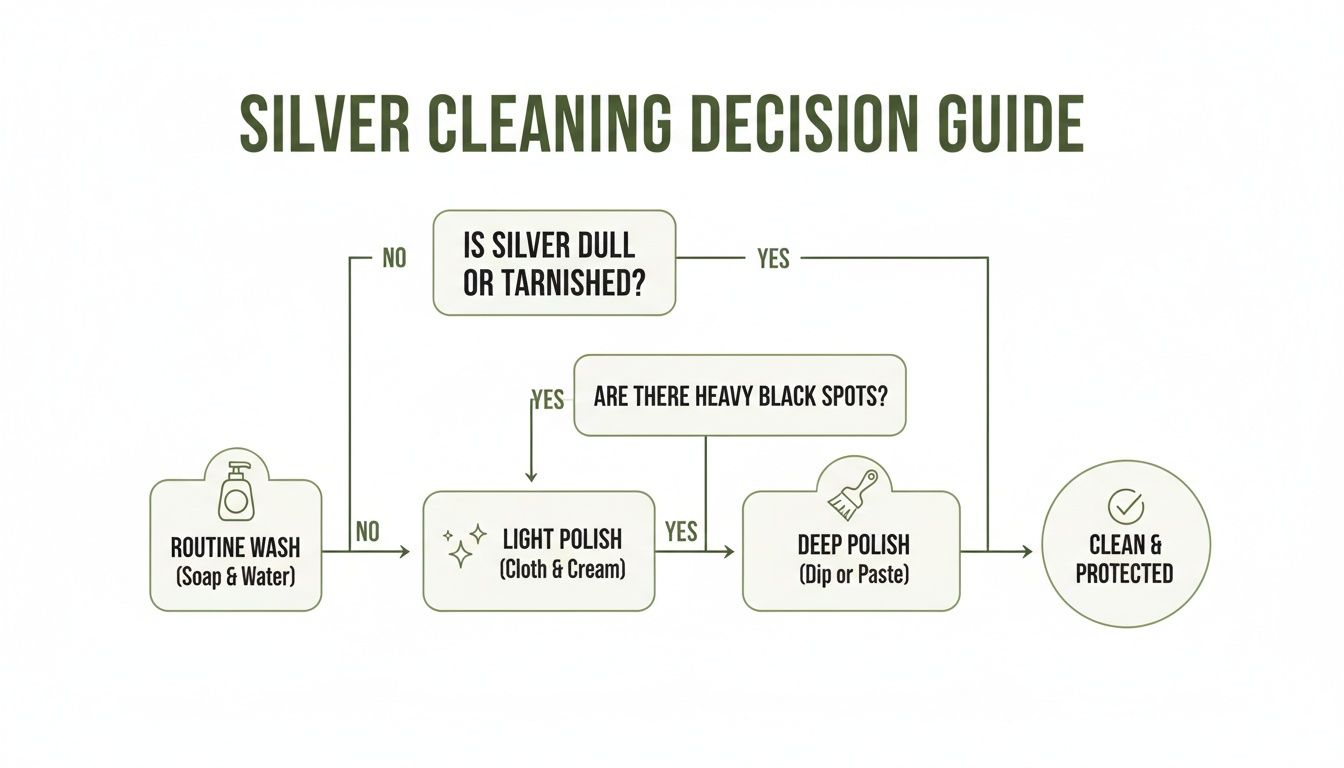
As you can see, polishing should be a response to visible tarnish or dullness, not just part of a routine. This mindset helps prevent unnecessary wear on your valuable pieces.
Daily Washing for Sterling Silver and Silver-Plate
The best defence is a good offence. A consistent daily washing routine is the single most effective way to minimise the need for deep cleaning down the line. The golden rule for both sterling silver and silver-plate is simple: wash them as soon as you can after a meal.
Letting food sit on the surface, especially anything salty, acidic, or sulphuric (like eggs), is practically an invitation for stubborn stains and tarnish to develop.
For hand-washing, a few simple guidelines make all the difference:
- Prep Your Basin: Line your washing-up bowl with a soft cloth to prevent scratches. Fill it with warm water and a small amount of gentle, non-citrus, pH-neutral liquid soap.
- Wash Gently: Use a soft sponge or cloth to wash each piece one by one. Pay special attention to the tines of forks and the bowls of spoons where food can easily get trapped.
- Rinse Well: Run each piece under clean, warm water to remove every trace of soap. Any residue left behind can cause spotting.
- Dry Immediately: This is perhaps the most crucial step. Use a soft, lint-free cloth (microfibre works beautifully) to dry every piece completely. Letting them air-dry is a sure-fire way to get water spots, which can etch the surface over time.
Good news for some – many modern sterling silver sets, like those from Carrs of Sheffield, are actually designed to be dishwasher safe. The trick is to use a non-citrus powder detergent, skip the high-heat cycles, and never, ever let silver and stainless steel touch inside the machine. This can cause a chemical reaction that leaves behind ugly black marks.
Deep Cleaning and Tarnish Removal
When daily washing isn't quite enough to bring back that original sparkle, it's time for a more focused deep clean. This is when you tackle the dullness and dark patches caused by tarnish, and the right approach will vary between sterling and plated items.
With sterling silver, you can be a bit more assertive. Take a quality, non-abrasive silver polish (brands like Goddards or Hagerty are excellent) and apply it with a soft cloth. Use straight, back-and-forth motions rather than circular ones – this minimises the appearance of fine scratches. For ornate patterns, a soft-bristled brush can help work the polish into all the nooks and crannies. Buff it all away with a clean cloth to reveal that brilliant shine.
Silver-plate, on the other hand, demands a far more delicate hand. Remember, the layer of silver is microscopic. Aggressive polishing will simply wear it away, exposing the base metal underneath. Always choose the gentlest polish you can find and use the lightest pressure. Your goal is simply to lift the tarnish, not to scrub the surface.
Troubleshooting Stubborn Stains
Even with the best care, you might occasionally face a tricky stain. Egg stains, for instance, are notorious for leaving dark blemishes due to the sulphur in the yolk. The best remedy is to act fast.
If a stain does set in, you can often lift it by making a simple paste of bicarbonate of soda and water. Apply it gently with a soft cloth, let it sit for a minute, and then rinse and dry thoroughly.
Restoring a heavily tarnished heirloom that’s been hidden away for years can feel like a monumental task. Whatever you do, resist the temptation to use harsh silver dips. They are highly acidic and can strip away the beautiful, subtle patina that gives antique silver so much of its character. Instead, opt for multiple, gentle applications of a high-quality cream polish over several sessions. Patience is your greatest tool here.
This proactive approach is essential for long-term preservation. A recent survey revealed a concerning trend among UK homeowners, where 39% admitted they'd rather throw away a dirty appliance than clean it. Applying that attitude to fine cutlery is a recipe for permanent damage. While it's heartening that 29% of Brits now clean their kitchens more often, areas like knife blocks and kettles are frequently missed, which just reinforces the need for specific care routines for our most treasured items. You can read more about these habits in research conducted by Country Living.
Silver Cutlery Cleaning Dos and Don'ts
To make things even clearer, here's a quick-reference table that summarises the essential best practices and common pitfalls when caring for your silver cutlery.
| Action | Do (The Right Way) | Don't (Common Mistakes to Avoid) |
|---|---|---|
| Daily Washing | Wash by hand promptly after use with gentle, non-citrus soap. | Let food, especially salty or acidic items, sit on the silver for hours. |
| Drying | Dry immediately and thoroughly with a soft, lint-free cloth like microfibre. | Allow pieces to air-dry, which leads to water spots and potential etching. |
| Polishing Sterling | Use a quality, non-abrasive cream polish with straight, back-and-forth motions. | Use circular scrubbing motions, which can create noticeable swirl marks. |
| Polishing Silver-Plate | Use the gentlest polish available with minimal pressure to protect the thin layer. | Polish aggressively or too frequently, which can wear away the plating. |
| Dishwasher Use | Use a non-citrus powder and ensure silver does not touch stainless steel. | Use liquid or citrus-based detergents, high-heat cycles, or mix metals. |
| Tarnish Removal | Use gentle, repeated applications of polish for heavy tarnish. | Use harsh chemical dips, which can strip away patina and damage the surface. |
| Storage | Store in a felt-lined drawer or anti-tarnish cloth, away from rubber bands. | Store in open air or wrap in plastic, which can trap moisture and chemicals. |
Following these simple guidelines will not only keep your silver looking its best but also ensure that it remains a cherished part of your home for many years to come.
Taking Polishing to the Next Level and Preventing Tarnish
Once you’ve got the hang of routine cleaning, you can turn your attention to the finer points of silver care. Polishing isn’t just about blitzing tarnish; it’s about restoring that deep, warm lustre while protecting the piece itself. The last thing you want to do is polish incessantly, as this can slowly wear away the delicate surface of both sterling and silver-plated items. The real art lies in strategic, careful polishing.
A proper polish brings back that unique, warm glow you only get with silver. It takes the right products and, more importantly, the right technique. I always recommend using a high-quality silver foam or cream polish. These are formulated to chemically dissolve the silver sulphide (the tarnish) rather than just scrubbing it off with harsh abrasives. That distinction is absolutely crucial for looking after your cutlery in the long run.
Mastering the Polishing Process
When you notice a dullness that a gentle wash just won't shift, it’s time to polish.
Start by applying a small dab of a reputable, non-abrasive silver polish onto a soft, lint-free microfibre cloth. It’s best to work on one piece at a time, applying the polish in straight, back-and-forth motions along the length of the handle or the bowl of a spoon.
Whatever you do, avoid using circular motions. This is a common mistake that can create noticeable swirl marks and spoil the finish. The straight-line technique follows the grain of the metal, which gives you a much more uniform and professional-looking shine.
For cutlery with ornate, detailed patterns – like you often find on traditional sterling sets – your best friend is a very soft-bristled brush, something like a baby's toothbrush. Just dab a tiny amount of polish onto the brush and gently work it into all the crevices where tarnish loves to hide. This little trick ensures you don't leave behind any white residue, which can really mar the look of detailed engravings. Once you’re done, grab a clean, dry microfibre cloth and buff the piece to a brilliant shine.
What Is Tarnish and How Can You Stop It?
Understanding why silver tarnishes is the first step to preventing it. Tarnish is simply the result of a chemical reaction between silver and sulphur compounds floating around in the air, which creates a layer of black silver sulphide. This whole process gets a move on in humid conditions and when exposed to certain foods, fabrics, and chemicals.
So, proactive care is really all about limiting your silver's exposure to these things. The most effective strategy is surprisingly simple: use your silver regularly. The gentle friction from handling and washing actually helps slow down the build-up of tarnish, keeping your cutlery brighter for longer.
"The truth about silver care is that polishing should be a corrective measure, not a routine chore. By understanding what causes tarnish and taking simple preventative steps, you can significantly reduce how often you need to bring out the polish, preserving the fine details and finish of your collection for decades."
Beyond regular use, proper storage is paramount. Storing your silver in a purpose-built canteen with a felt lining or wrapping each piece individually in anti-tarnish cloths creates a fantastic barrier against airborne sulphides. These materials are specially treated to absorb the problem gases before they can react with your silver.
Recent trends show that while 29% of the UK now cleans kitchens more often, there are still gaps in specialised care for items like silverware. Expert advice from sources like Prima underscores the importance of polishing sparingly—just 'a few times a year'—to avoid unnecessary wear. This view is shared by esteemed makers like Robbe & Berking, who note that even dishwasher-safe silver typically only needs polishing twice a year. You can discover more about how UK cleaning habits impact household items.
Proactive Tips for a Tarnish-Free Collection
Weaving a few simple habits into your routine can make a world of difference in your silver cutlery cleaning efforts and keep your pieces ready for use at a moment's notice.
Here are a few tried-and-tested strategies:
- Mind the Menu: When serving foods like eggs, mayonnaise, or onions, it's a good idea to use stainless steel serving utensils. This minimises direct contact and potential tarnishing.
- Wash and Dry Promptly: Never, ever let your silver sit unwashed overnight. Salty and acidic food residues are corrosive and will speed up tarnishing like nobody's business.
- Use Anti-Tarnish Strips: If you store your cutlery in a drawer, popping a few anti-tarnish paper strips or tabs inside will help absorb sulphur gases from the air.
- Keep It Dry: Humidity is tarnish’s best mate. Never store your silver in a damp area. Some collectors I know even place a small packet of silica gel in their storage chest to soak up any excess moisture.
By combining these more advanced polishing techniques with a proactive prevention strategy, you move from simply cleaning your silver to actively curating and preserving it. It’s a thoughtful approach that ensures your treasured collection remains a source of pride and beauty for any occasion.
Proper Storage and Long-Term Maintenance Schedules

Mastering silver cutlery cleaning is only half the battle. How you store your treasured pieces between meals is every bit as important for keeping them in pristine condition for years to come. Think of good storage as your first line of defence, shielding your silver from the very things that cause tarnish and scratches—humidity, airborne chemicals, and just bumping against other items.
By getting the storage right, you're essentially doing proactive maintenance. Control the environment, and you’ll find you need to polish your cutlery far less often. This isn't just about saving time; it's about preserving the fine details and finish, especially on delicate silver-plated items where every polish technically removes a microscopic layer.
Choosing the Right Storage Solution
The perfect storage spot is dry, stable, and limits your cutlery's exposure to air. For many enthusiasts and collectors, the classic felt-lined canteen or cutlery chest is the gold standard, and for good reason. The soft fabric lining is a buffer against scratches, while the felt itself helps to absorb moisture and sulphur compounds from the air—tarnish's main culprits.
There are some excellent and practical options out there:
- Cutlery Rolls: These are brilliant for organising a full set. Each knife, fork, and spoon gets its own pocket, stopping them from clattering together. The best ones are made from specially treated anti-tarnish cloth, giving you an extra layer of chemical protection.
- Felt-Lined Drawers: If you have a dedicated drawer in a sideboard, fitting it with a custom felt insert is a superb choice. It keeps everything organised, easy to grab, and well-protected.
- Iconic Containers: For a touch of style, pieces like Christofle’s iconic Mood Egg are more than just storage; they’re design statements that keep your cutlery protected and ready to impress.
No specialised storage? No problem. You can easily create your own protective system. Just wrap each piece of cutlery individually in acid-free tissue paper or a soft, natural fabric like cotton flannel. It’s a simple step, but it makes a huge difference in preventing scratches and slowing down tarnish.
A crucial warning: Never, ever let your silver touch rubber, certain woods like oak, or newspaper. Rubber bands will leave stubborn black marks that are a nightmare to remove. Oak and newsprint can release acids that will actively speed up corrosion.
Tailored Maintenance Schedules
Consistency is the real secret to keeping a collection looking its best. A simple maintenance schedule removes the guesswork, ensuring your pieces get the right attention at the right time. But there's no "one-size-fits-all" approach here; your routine should absolutely depend on how often you use your cutlery.
A good plan stops you from both neglecting your silver and over-polishing it. To help you get started, here are a few sample schedules based on different types of users.
Sample Silver Care Schedules
How often you clean and polish your silver depends entirely on its use. A daily-use set will need a different touch than a collector's set that only comes out for special occasions. Find the profile that best matches you in the table below for a recommended routine.
| User Type | Frequency of Use | Recommended Cleaning Routine | Recommended Polishing Schedule |
|---|---|---|---|
| The Homeowner | Daily | Wash immediately after each meal. Hand-dry thoroughly. | Polish lightly every 4-6 months or as needed. |
| The Collector | Display/Occasional | Dust weekly with a soft cloth. Wash before and after use. | Polish gently once or twice a year to maintain lustre. |
| Hospitality Pro | High-Volume Events | Pre-event check and light buff. Post-event wash and dry. | Polish after every 3-4 uses to maintain a flawless appearance for guests. |
This schedule provides a solid foundation. Remember to always observe your silver; if it starts to look a bit dull, a quick, light polish is always better than waiting for heavy tarnish to set in.
For those in the hospitality industry, a rigorous checklist is non-negotiable. Before any event, every piece should be inspected for spots or dullness and given a quick buff with a silver cloth. The minute the event is over, the priority is to wash and dry everything immediately to stop food acids from causing damage overnight. It’s this disciplined system that guarantees a flawless, high-quality presentation for every single guest.
Answering Your Top Silver Cleaning Questions
When you've got a treasured collection of silver, it's only natural to have a few questions about how to best care for it. After 50 years in the business at Lincoln House Cutlery, we've pretty much heard them all. We've put together the most common queries right here to give you clear, expert answers.
Getting these little details right is what separates simply cleaning your silverware from truly preserving it for the next generation.
Can I Safely Wash Silver Cutlery in the Dishwasher?
This is easily the question we get asked the most, and the answer is a cautious "yes". Many modern sterling silver sets, particularly those from respected makers like Carrs, are designed to handle the dishwasher. But you absolutely must follow a few golden rules to prevent damage.
Stick to a gentle, low-heat cycle and, this is critical, only use a non-citrus powder detergent. Gels or liquids with citric acid can lead to spotting and will dull the finish over time. The most important rule of all? Never let your silver cutlery touch stainless steel items in the machine. This contact creates a chemical reaction that leaves behind stubborn black marks that are a real pain to remove.
For any older, antique, or particularly delicate pieces—especially those with hollow handles or accents like bone or wood—hand-washing is still the safest bet.
How Often Should I Polish My Silverware?
How often you need to polish comes down to how you use and store your silver, not a fixed schedule. If it's your everyday cutlery, you might only need to give it a proper polish once or twice a year. The regular use and washing do a great job of keeping the worst of the tarnish at bay.
For display pieces tucked away correctly in an anti-tarnish chest or cutlery roll, a good polish every six months to a year should be plenty.
The key takeaway here is that over-polishing is a real thing. Too much polishing can slowly wear away the fine, intricate details on your pieces. On silver-plated items, it can eventually strip the precious silver layer right off. Often, a quick buff with a treated silver cloth is all that’s needed to bring back the shine between deep cleans.
What Is the Best Way to Remove Stubborn Stains?
For really heavy tarnish, your best friend is a high-quality, non-abrasive silver polish or foam. When you apply it, use a soft cloth and go with straight, back-and-forth motions—never circles. This technique helps prevent those fine swirl marks from appearing on the surface.
If you're dealing with specific food stains, especially from sulphuric foods like eggs, acting fast is your best defence. Wash the piece as soon as you can. If a stain has already set in, you can usually lift it by gently applying a simple paste made from bicarbonate of soda and water.
A quick word of warning: steer clear of commercial "silver dips." They seem like a fast solution, but these products are loaded with harsh acids. They can strip away the beautiful, subtle patina that gives antique silver its unique character and charm. In the long run, they are far too aggressive and do more harm than good. A little patience and a quality cream polish will always be the better choice for preserving your collection.
At Lincoln House Cutlery, we believe that beautiful silverware is meant to be used and enjoyed. Explore our curated collections of cleaning essentials and anti-tarnish storage solutions to keep your treasured pieces shining for generations. Visit us to find everything you need for perfect silver care.
