
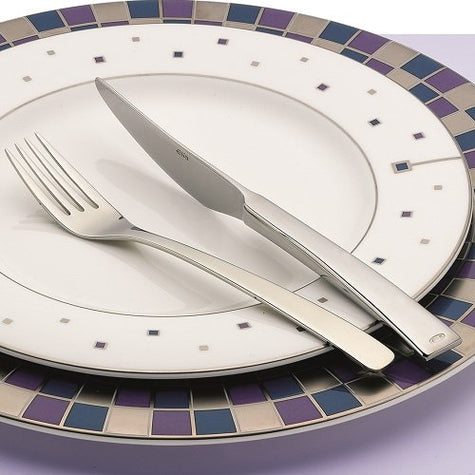


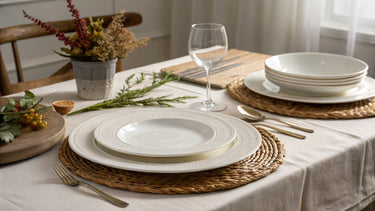
A complete formal place setting includes a dinner plate, a side plate (also called a bread plate), and, for multi-course meals, a soup bowl and a dessert plate. Each piece has a defined position and purpose — none is optional if you want a properly laid table.
Key Takeaways
- A dinner plate measures 27–30 cm across and holds the main course; a side plate measures 15–18 cm and sits to the upper left for bread or a starter salad.
- A complete formal place setting uses 4 plate types: dinner plate, side plate, soup bowl (on a liner plate), and dessert plate or bowl.
- Informal everyday settings typically use just 2: a dinner plate and a side plate.
- Side plates are placed to the left of the forks, roughly in line with the bread knife, which rests on its rim with the blade facing inward.
- Lincoln House has supplied complete place settings to 5-star hotels and Michelin-starred restaurants since 1967 — the proportions and positioning described here follow professional hospitality standards.
What is the difference between a dinner plate and a side plate?
A dinner plate is the centrepiece of any place setting. It typically measures 27–30 cm in diameter and carries the main course. Its size provides room for a balanced portion of protein, vegetables and sauce without crowding the food.
A side plate is smaller — generally 15–18 cm — and sits to the upper left of the dinner plate. Its primary role is bread: it holds a bread roll throughout the meal so crumbs stay contained and the main plate stays clean. At informal suppers it doubles as a starter plate or a surface for cheese.
What does a complete formal place setting include?
The four plate pieces
A fully laid formal table uses four plate positions. The dinner plate anchors the centre. A soup bowl, set on a shallow liner plate of its own, sits on top of the dinner plate at the start of the meal and is cleared before the main course arrives. The side plate occupies the upper-left position throughout. A dessert plate or bowl is brought out last, either plated in the kitchen or set during the dessert course.
The cutlery that pairs with each plate
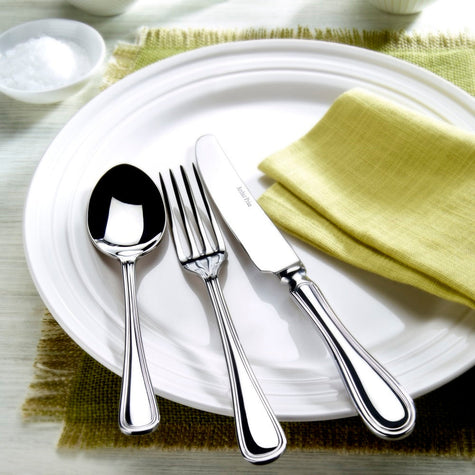
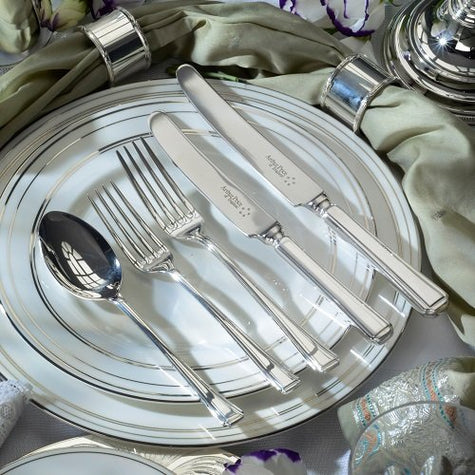
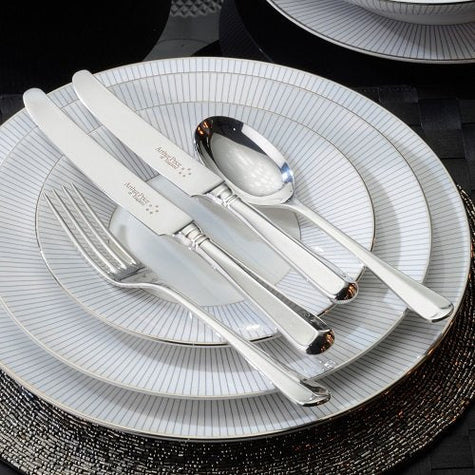
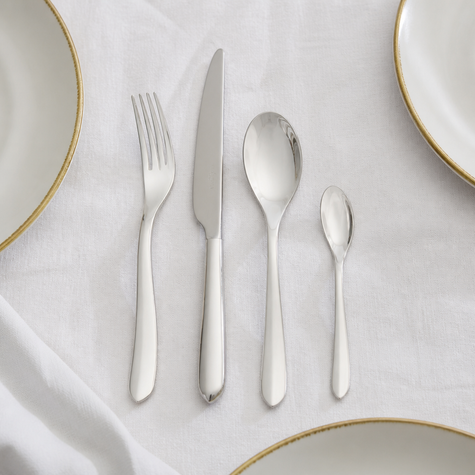
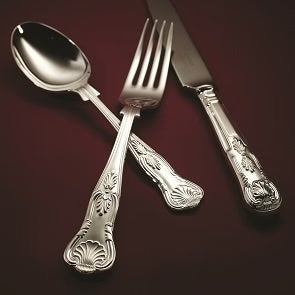
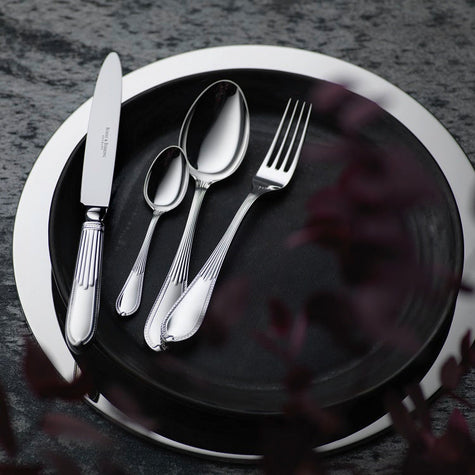
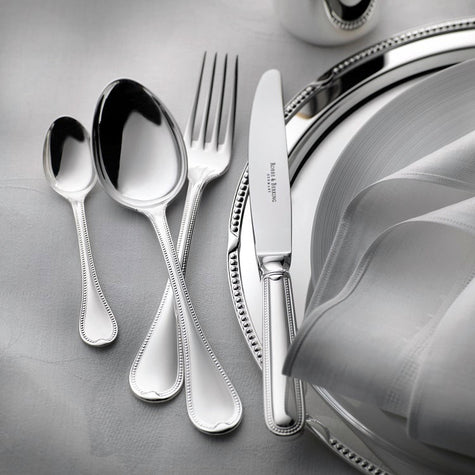
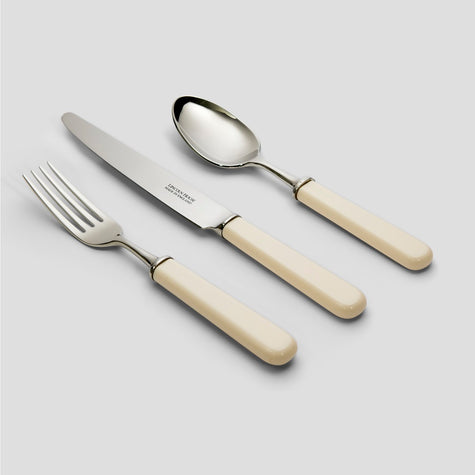
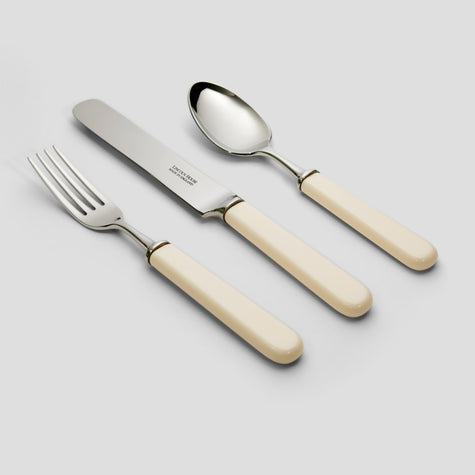
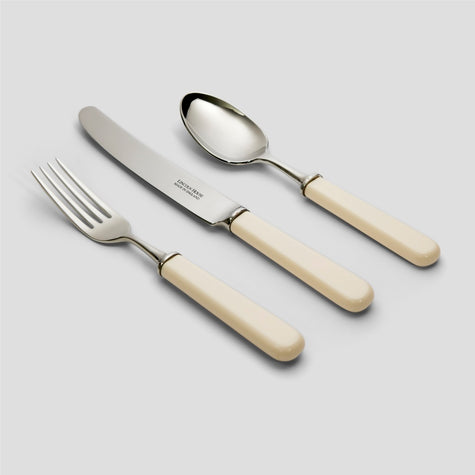
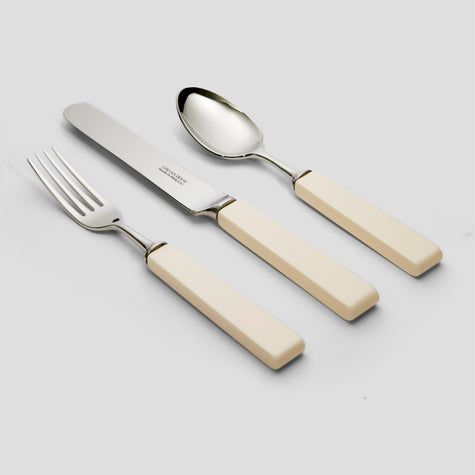
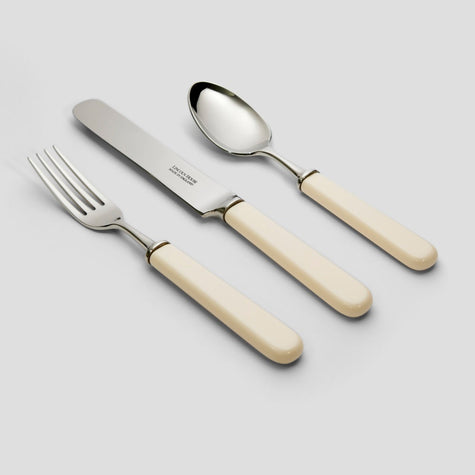
Each plate corresponds to specific cutlery pieces. The dinner plate is flanked by a dinner knife (right) and dinner fork (left). A soup spoon sits to the far right if a soup course is served. Dessert cutlery — a dessert spoon and fork — is traditionally laid horizontally above the dinner plate, handles pointing right and left respectively. The bread knife rests across the side plate with its blade turned inward. For a full set of everything needed, browse the cutlery sets available at Lincoln House.
Which pieces belong in an informal everyday place setting?
For everyday family meals, the setting simplifies to two plates. A dinner plate and a side plate are sufficient for most casual dining: the side plate handles bread or a small starter, and the main plate does everything else. A dessert bowl or plate is brought out at the appropriate moment rather than laid in advance.
This paired approach is also practical. It keeps the table uncluttered, reduces the number of pieces to wash, and works equally well whether you are serving a weekday pasta or a relaxed Sunday roast.
Dinner plate vs side plate: a quick comparison
| Piece | Diameter | Position | Primary use |
|---|---|---|---|
| Dinner plate | 27–30 cm | Centre of the setting | Main course |
| Side plate | 15–18 cm | Upper left, beside the forks | Bread, butter, starter salad |
| Soup bowl (on liner) | 20–23 cm | On top of dinner plate | Soup or consommé course |
| Dessert plate or bowl | 20–23 cm | Brought out at dessert | Pudding, cheese, fruit |
How should a side plate be positioned correctly?
The side plate goes to the upper left of the dinner plate, aligned roughly with the top of the forks. The bread knife rests across it, blade facing inward toward the diner. This placement mirrors European service standards and keeps the bread away from the main course so the two never accidentally merge on the plate.
A common error is placing the side plate directly to the left of the dinner plate at the same height as the forks. It should sit slightly higher, so there is no confusion between the bread knife and the dinner knife, and no risk of a guest reaching across to their neighbour's plate.
Does the material of the plate affect which pieces you choose?
The choice between fine bone china, porcelain or stoneware affects the occasion more than the configuration. What matters for a complete place setting is that the cutlery scale matches the plate size. Heavy, substantial dinner plates — those used in fine-dining establishments — pair best with full-weight cutlery in 18/10 stainless steel, silver plated cutlery, or sterling silver cutlery. Lighter everyday ceramic works well with any gauge.
At Lincoln House, customers setting a table from scratch often find it helpful to match the weight and finish of the cutlery to the occasion the plates are reserved for — formal silver plate for the best china, robust 18/10 stainless for everyday use.
Frequently Asked Questions
How many plates does a complete place setting require? A formal complete place setting uses four plates: a dinner plate, a side plate, a soup bowl on a liner plate, and a dessert plate. An informal everyday setting uses two — a dinner plate and a side plate — with the dessert plate brought out separately.
Where does the side plate go in a place setting? The side plate sits to the upper left of the dinner plate, positioned roughly in line with the top of the forks. The bread knife rests across it with the blade turned inward toward the diner.
Is a side plate the same as a bread plate? Yes. Side plate and bread plate are interchangeable terms for the small 15–18 cm plate placed to the upper left. It is called a side plate in formal table-setting vocabulary and a bread plate in everyday use.
Do you need a side plate for an informal dinner? A side plate is useful even at informal dinners because it keeps bread separate from the main course and prevents crumbs from contaminating the main plate. It is not strictly required, but most table-setting guides recommend including one.
Can you use dessert plates as side plates? A dessert plate (typically 20–23 cm) is larger than a side plate (15–18 cm), which makes it slightly awkward for bread. It can substitute in a pinch, but a purpose-sized side plate keeps the table proportions balanced and the setting looking considered.
What is the difference between a liner plate and a dinner plate? A liner plate is a flat, shallow plate used solely as a base beneath a soup bowl; it is removed with the bowl when the course is cleared. A dinner plate is deeper-rimmed and sized to carry a full main course. The two are similar in diameter but serve entirely different purposes.
