


A serving silver tray is an undeniable statement piece, a functional centrepiece that speaks of refined taste and thoughtful entertaining. It’s so much more than a simple dish; it transforms any occasion, layering it with a sense of heritage and sophistication. Whether you're presenting delicate canapés or organising a beautiful display, its purpose is to elevate the moment.

The Enduring Appeal of a Serving Silver Tray
A serving silver tray is far more than a practical tool for carrying food and drinks. Think of it as the stage upon which moments of hospitality are presented. Just as a beautiful frame enhances a painting, a silver tray elevates everything it holds. A simple offering of tea becomes a cherished ritual; a selection of appetisers becomes a grand gesture. Its brilliant, reflective surface catches the light beautifully, drawing the eye and making it a natural focal point in any setting.
This timeless appeal is rooted in a rich history. For centuries, silverware has been synonymous with quality, celebration, and family legacy. Owning a silver tray connects you to this long tradition of thoughtful entertaining and meticulous craftsmanship. It signals an appreciation for detail and a desire to create truly memorable experiences for your guests, whether it's for a formal dinner party or an intimate family gathering.
More Than Just for Serving
The real magic of a silver tray lies in its ability to blend function with decorative flair. Its role extends far beyond the dining room, making it an incredibly versatile addition to any well-appointed home.
You might find it useful as:
- An Elegant Bar Station: Arrange decanters, crystal glasses, and cocktail accessories to create a sophisticated drinks corner.
- A Refined Vanity Organiser: Group perfumes, jewellery, and lotions on a smaller tray for a touch of luxury in a bedroom or dressing room.
- A Dynamic Centrepiece: Use it as a base for seasonal decorations, from scented candles and pinecones in winter to a vibrant display of fresh flowers in summer.
A silver tray is not merely serveware; it is a versatile piece of decor that introduces light, luxury, and organisation to any space. It provides a contained, curated platform that makes any collection of items look intentional and important.
Ultimately, investing in a high-quality serving silver tray means acquiring a piece that grows with you. Its first purpose might be for serving champagne at a wedding, but it can later become the foundation for a stunning coffee table display or a cherished heirloom passed down to the next generation. Its beauty is matched only by its adaptability, ensuring it remains a relevant and beloved object for years to come.
Choosing Between Sterling Silver and Silver Plate
Getting to grips with the material of your silver serving tray is the first, and most important, decision you'll make. It affects everything—from its weight in your hands and its intrinsic value to the way you’ll care for it over the years. The choice really comes down to two paths: sterling silver or silver plate. Understanding what sets them apart is the key to finding a piece that truly suits your needs.
It’s a bit like choosing between solid oak furniture and a beautifully crafted wood veneer. One is an investment in the pure material itself, while the other offers a near-identical look with a different construction and price. Both have their rightful place, but you need to know what you’re buying.
The Essence of Sterling Silver
A sterling silver tray is the solid oak of the silverware world. By definition, it’s an alloy made of 92.5% pure silver, with the remaining 7.5% made up of other metals (usually copper) to give it strength. This isn't just a guideline; it's a legally standardised composition, verified by a hallmark stamped discreetly onto the piece to guarantee its purity.
That high silver content gives sterling pieces their signature heft and a warm, distinctive lustre that only deepens with age. You’re investing in a precious metal, so its value is tied to both the artistry of the piece and the current silver market. It’s why sterling silver trays are so often considered heirlooms, destined to be passed down through generations.
The Craft of Silver Plate
In contrast, silver plate is the masterfully executed veneer. It begins with a sturdy base metal—like copper, brass, or nickel silver—which is then coated with a thin layer of pure silver through a process called electroplating. The quality and lifespan of a silver-plated tray really hinge on two things: the thickness of that silver layer and the quality of the metal underneath.
A well-made silver plate tray can be almost impossible to distinguish from sterling to an untrained eye. It delivers that same brilliant shine and sense of occasion, but at a more accessible price point. This makes it a fantastic choice if you want the luxurious look of silver without the major investment, especially in busy hospitality settings where both durability and cost are paramount.
This visual guide can help you decide which path is right for you, based on your priorities for the occasion, its use, and your personal style.
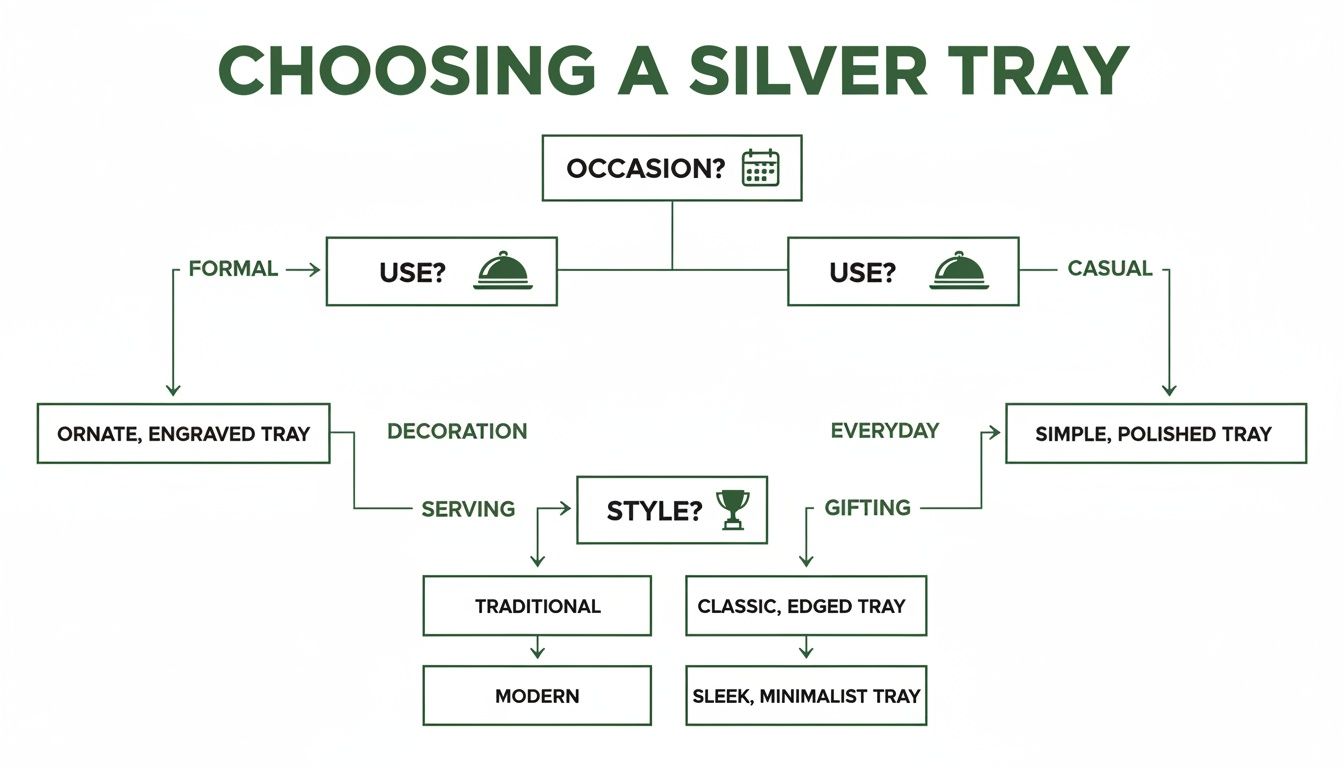
As the flowchart shows, while sterling is often the go-to for heirloom pieces and milestone events, silver plate provides a wonderfully practical and elegant alternative for more frequent use or for exploring different styles.
Key Differences at a Glance
To make a truly informed choice, it helps to see the main attributes side-by-side. Our table below breaks down the key differences, giving you the confidence to select the perfect silver serving tray for your collection.
Comparing Sterling Silver and Silver Plate Serving Trays
| Attribute | Sterling Silver | Silver Plate |
|---|---|---|
| Composition | An alloy of 92.5% pure silver and 7.5% other metals. | A base metal (copper, nickel) coated with a thin layer of pure silver. |
| Value | High intrinsic value based on precious metal content and craftsmanship. Often appreciates over time. | Lower initial cost. Value is in the aesthetic and craftsmanship, not the metal itself. |
| Weight & Feel | Noticeably heavier and more substantial. | Lighter than a sterling equivalent of the same size. |
| Hallmarks | Legally required hallmark indicating purity (e.g., "925" or a lion passant in the UK). | May have manufacturer's marks, but no official purity hallmark. |
| Care | Requires regular polishing to prevent tarnish but is very durable. Scratches can be professionally polished out. | The silver layer can wear away over time with excessive polishing or use, revealing the base metal. Requires gentle care. |
| Best For | Heirlooms, significant gifts, formal occasions, and long-term investments. | Frequent use, hospitality settings, decorative pieces, and achieving a luxury look on a budget. |
Ultimately, the choice comes down to what you value most in a piece.
The decision between sterling and plate is fundamentally about permanence versus practicality. Sterling is a lifetime acquisition of precious metal, while silver plate is an acquisition of timeless style.
Looking at the market context, United Kingdom silver hallmarking statistics offer a fascinating glimpse into the world of sterling silver. The World Silver Survey noted a 2% decline in UK hallmarking in its most recent report—a significant figure, as the hallmark is the official stamp of sterling quality.
This highlights just how special the sterling market is, where every hallmarked piece is part of a verified legacy. Whether you lean towards the enduring value of sterling or the accessible elegance of silver plate, your decision should align with your budget, how you plan to use it, and what you want the piece to represent for years to come.
How to Select the Perfect Tray for Any Occasion
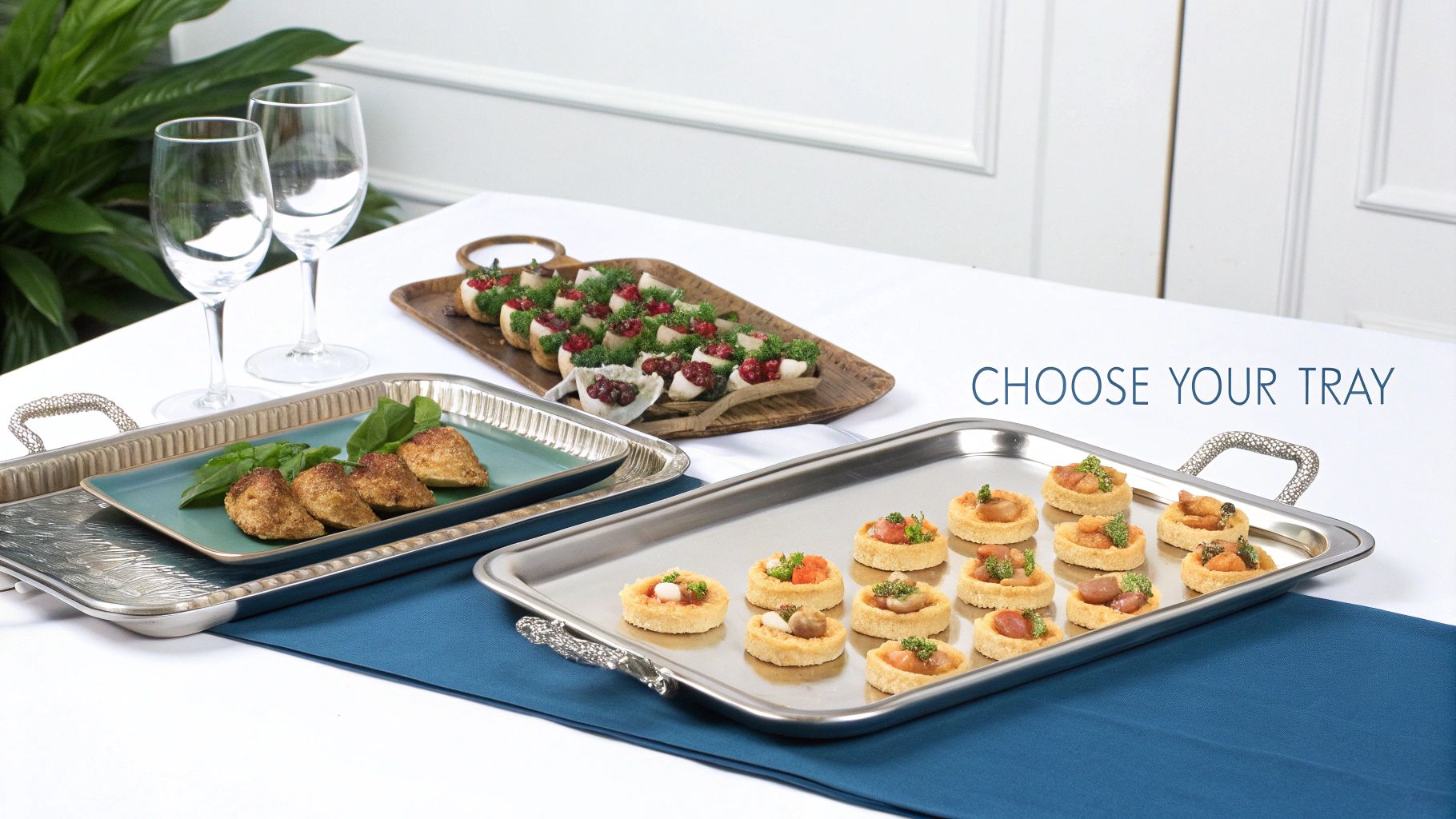
Choosing the right serving silver tray is something of an art form, blending good looks with sheer practicality. A truly exceptional tray does more than just sit there looking magnificent; it feels like a natural part of the occasion, perfectly suited to the task at hand.
To get it right, you need to think about three things: its size and shape, its design style, and its functional features. Nailing these elements ensures you end up with a piece that’s not only a joy to look at but a pleasure to use, whether for a quiet get-together or a grand celebration.
Matching Size and Shape to the Task
The first and most basic thing to consider is a tray's dimensions. Its size and shape will dictate what you can comfortably carry and how it fits into the room. Just imagine trying to serve a dozen champagne flutes on a tiny, circular tray—it’s not just awkward, it’s a recipe for disaster.
Here’s a simple way to think about matching the form to the function:
- Large Rectangular Trays: Think of these as the workhorses of entertaining. Their generous surface is perfect for carrying multiple drinks, a full tea service, or a large spread of canapés. The straight edges also make them much easier to navigate through a crowded room.
- Oval and Circular Trays: These shapes tend to feel a bit softer and more intimate. A medium oval tray is ideal for presenting a cheese course or after-dinner chocolates, while a small circular one can elegantly hold a single decanter and a couple of glasses.
- Footed Trays: A tray with small feet, sometimes called a 'butler's tray', adds a touch of height and grandeur. This slight elevation not only makes it easier to lift from a table but turns the tray into a miniature stage for whatever you’re presenting.
You’ll also want to consider the scale of your events. A hospitality professional might need a fleet of large, sturdy trays. For home entertaining, a single, versatile medium-sized tray might be all you ever need.
Aligning Style and Design with Your Décor
Beyond its physical form, a tray’s design tells a story. Its look and feel should harmonise with its surroundings, whether that’s the decor of your home or the theme of an event. A mismatch can feel jarring, but when you get it right, it creates an atmosphere of effortless elegance.
Think of your tray as the final accessory that completes an outfit. An ornate, heavily chased Victorian-style tray with a floral border would look absolutely stunning in a traditional home filled with antiques. Its intricate detail would complement the classic architecture and rich fabrics perfectly.
On the other hand, a sleek, unadorned tray with clean lines and a mirror-like finish—perhaps in a minimalist Danish or Art Deco style—would be the natural choice for a modern, contemporary space. Its beautiful simplicity allows the design of the room to shine through.
The style of a silver tray should not compete with its environment, but rather echo it. It's the final brushstroke that unifies the entire scene, reflecting the character of the host and the spirit of the occasion.
If you’re ever in doubt, a simple, classic design with a gadroon or reeded edge is incredibly versatile. It has a timeless quality that bridges the gap between traditional and modern settings, making it an excellent first investment for any collection.
Evaluating Key Functional Features
Finally, it’s the small details that make a huge difference in how practical a tray is to use. A beautiful piece that’s awkward to handle will likely spend most of its time stuck in a cupboard. Always look for those functional details that make life easier.
Handles are absolutely paramount. They need to be securely attached and feel comfortable in your hand, giving you a confident grip. Open handle designs are often easier to lift than integrated side handles, especially if you’re wearing gloves for formal service.
Another crucial feature is the rim or gallery. A raised edge, whether simple or ornate, acts as a vital barrier. It helps stop glasses from sliding off and will contain any minor spills. For serving drinks, a classic gallery tray with its high, pierced sides offers the most security and peace of mind.
These features are what transform a decorative object into a reliable tool for hospitality. A well-designed serving silver tray feels balanced in your hands, giving you the confidence to move through a room so you can focus on your guests, not on precarious glassware.
Mastering the Art of Silver Care and Polishing
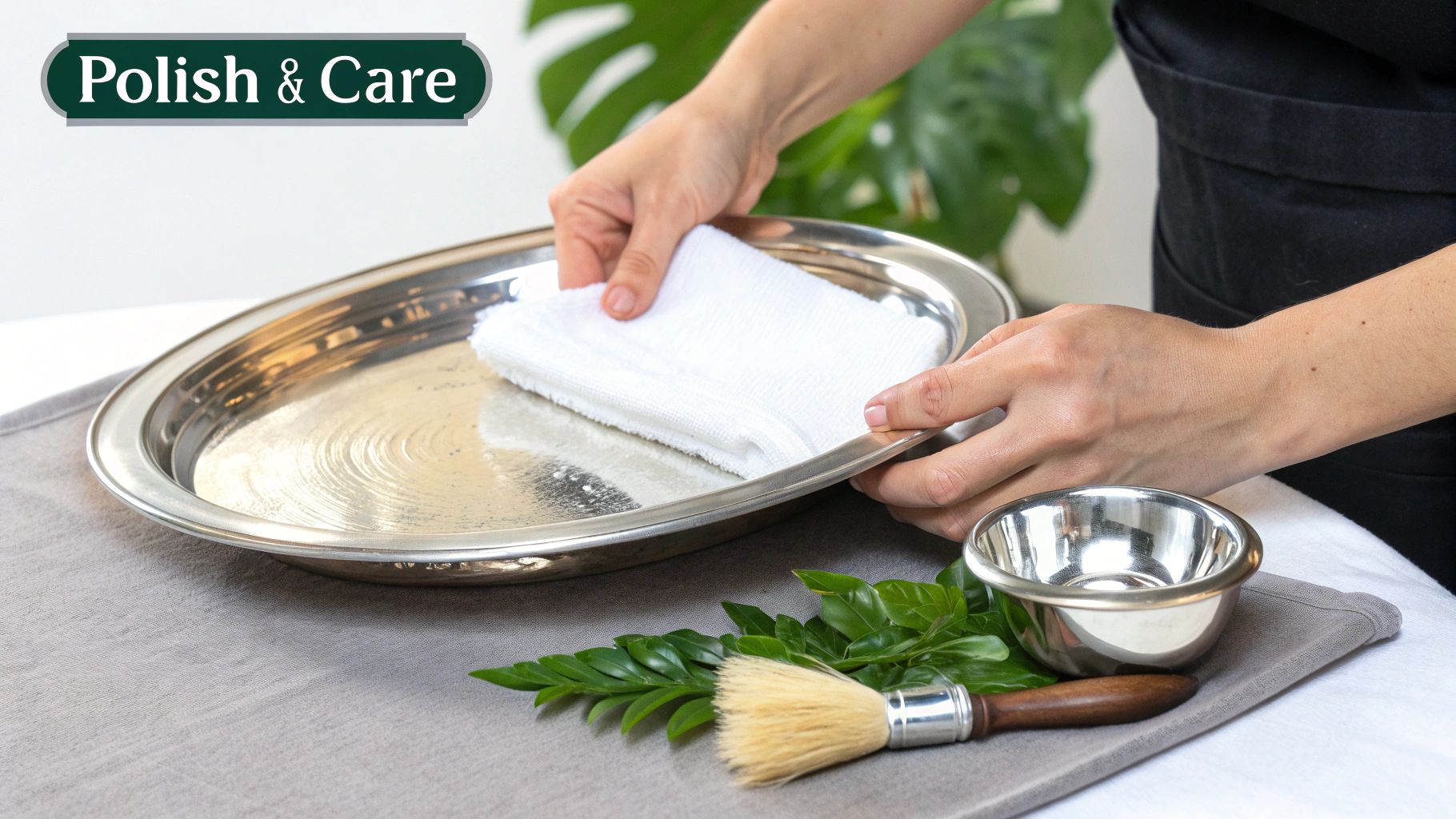
The fear of tarnish is often the single biggest reason a beautiful serving silver tray remains hidden away. But let's put that fear to rest. Tarnish isn't a flaw; it's simply a natural chemical reaction when silver meets sulphur compounds in the air.
Think of it like a fine leather jacket developing a patina over time. It’s a sign of its authentic nature, not neglect. With the right techniques, looking after your silver is straightforward, ensuring it keeps its brilliant lustre for generations to enjoy.
The Gentle Approach to Routine Cleaning
For day-to-day upkeep, gentleness is everything. The goal is simply to remove fingerprints, dust, or food residue without resorting to anything harsh that could harm the silver’s delicate surface.
Follow this simple process after each use:
- Wash Promptly: Hand wash your silver tray as soon as you can with warm water and a tiny bit of mild, phosphate-free washing-up liquid. Never leave it to soak.
- Use a Soft Cloth: A soft cotton cloth or non-abrasive sponge is perfect. Stay well away from scouring pads or stiff brushes, as these will leave tiny scratches that dull the finish.
- Rinse Thoroughly: Use clean, warm water to rinse off every bit of soap. Any residue left behind can cause spotting.
- Dry Immediately: This is the most crucial step. Use a soft, lint-free cloth like cotton or flannel to dry the tray completely. Letting it air-dry is a sure-fire way to get water spots.
Tarnish is easiest to manage when it’s just a faint golden hue. Frequent, gentle cleaning prevents the buildup of dark, stubborn tarnish, which means you'll need to do a full polish far less often.
Best Practices for Effective Polishing
Polishing should be a periodic ritual, not a weekly chore. You only need to do it when you notice the tell-tale signs of yellowing or darkening. The aim is to restore that signature shine of your serving silver tray with minimal impact.
When it is time for a polish, remember that quality products and proper technique make all the difference. Don't be tempted by household remedies like toothpaste, which is abrasive and will permanently scratch the surface. Instead, invest in a good quality silver polish or foam from a reputable brand.
For a flawless finish, apply the polish with a soft, clean cloth. Use gentle, straight back-and-forth motions—never circular ones. This technique works with the grain of the silver and prevents swirl marks. Afterwards, rinse the tray again with warm water and dry it meticulously.
Common Mistakes to Avoid
Protecting your investment is as much about knowing what not to do. Many well-intentioned owners can inadvertently damage their silverware through improper care.
Steer clear of these common pitfalls:
- Dishwasher Dangers: Never, ever put a silver tray in the dishwasher. The harsh detergents and high heat can cause irreversible damage, leaving the surface dull and pitted.
- Rubber Contact: Avoid any contact with rubber bands, rubber mats, or even latex gloves. The sulphur in rubber dramatically accelerates tarnishing, leaving dark marks behind.
- Abrasive Cleaners: Resist the urge to use any kind of abrasive cleaner or tool. Even paper towels can contain wood fibres that are coarse enough to scratch silver.
By following these professional tips, you can turn silver care from a daunting task into a simple, rewarding routine.
Creative Ways to Style Your Silver Tray

While its primary role is in hospitality, a serving silver tray has a transformative power that reaches far beyond presenting drinks or canapés. It's best to think of your tray not as a static object, but as a versatile canvas for creativity and a fundamental tool in home styling. Its reflective surface and defined borders can bring order, light, and a sense of intention to any corner of your home.
This adaptability means your tray can evolve with the seasons and your changing décor. It's a piece that invites you to experiment, allowing you to curate miniature scenes—or vignettes—that add personality and elegance to your living space. By viewing your tray as a decorative asset, you truly unlock its full potential.
From Sideboard to Centrepiece
One of the most effective ways to style a silver tray is to use it as the foundation for a dynamic centrepiece on a dining or coffee table. The tray provides a contained stage, making any collection of items look curated and significant rather than simply cluttered.
For a classic arrangement, try grouping together pillar candles of varying heights. The silver will beautifully reflect the candlelight, creating a warm, inviting ambience. You can easily adapt this for the seasons:
- Autumn: Surround the candles with small gourds, dried leaves, and cinnamon sticks.
- Winter: Weave in sprigs of holly, pinecones, and delicate fairy lights for a festive feel.
- Spring and Summer: Use a bed of fresh moss or arrange small bud vases with seasonal blooms.
A tray makes any collection of items look more important. By confining objects within its borders, you create a focal point that draws the eye and makes a deliberate design statement.
This approach works because it introduces structure. The tray’s edges define the decorative space, giving your arrangement a polished and professional look that is effortless to create and change.
The Sophisticated Bar and Vanity Tray
Beyond the dining table, a serving silver tray is the perfect element for organising and elevating other areas of your home. Its luxurious finish adds a touch of refinement to everyday items, transforming functional corners into stylish displays.
Consider creating a dedicated drinks station on a sideboard or bar cart. Arrange a few of your favourite crystal decanters, a silver cocktail shaker, and some elegant glassware on the tray. This not only keeps everything neatly organised but also creates an inviting setup for entertaining guests. It’s a classic touch seen in the finest hotels and homes.
Similarly, a smaller tray can bring order and glamour to a dressing table or bathroom vanity. Use it to group perfumes, skincare bottles, and jewellery. The reflective surface brightens the space and makes daily routines feel a little more special. It’s a practical way to keep surfaces clear while showcasing your favourite items.
Brightening Spaces and Adding Depth
Never underestimate the power of a silver tray’s reflective quality. Placed strategically, it can manipulate light to brighten a dim corner or add visual depth to a small room. Position a tray on a console table in a hallway with a lamp on it; the silver will amplify the light, making the entire area feel more spacious and welcoming.
You can also use a tray to add layers to your décor. Leaning a small, ornate tray against the back of a bookshelf behind other objects adds an unexpected touch of metallic shine and texture. This simple trick creates visual interest and makes the entire display feel richer and more complex.
Understanding the Investment Value of Silver
A sterling serving silver tray is a rare purchase, sitting at the crossroads of functional art and tangible asset. While its main job is to bring a touch of elegance to your gatherings, it also has an intrinsic value tied to the world of precious metals. Thinking of your purchase in this way helps frame it not just as a beautiful object, but as a real investment in lasting quality.
Unlike many decorative items that lose value over time, a sterling silver piece holds a baseline worth linked directly to its weight in silver. This gives it a stability few other household luxuries can offer. It's an asset you can use and enjoy every day, all the while knowing its value is supported by a globally traded commodity.
More Than an Object, It Becomes a Legacy
The true, long-term value of a silver tray, however, often goes far beyond its material worth. This shift happens the moment it's personalised. The simple act of engraving transforms the piece from a lovely product into a unique family treasure.
Adding a monogram, a family crest, or the date of a special occasion like a wedding or anniversary gives the tray a story. It becomes a historical marker, a physical reminder of a family’s biggest moments. This personal touch is what elevates it to heirloom status, making sure it will be cherished and passed down through the generations.
A sterling silver tray is bought for its beauty and utility, but it is kept for the memories it comes to represent. Engraving is the bridge between the two, turning a valuable object into an invaluable legacy.
This sentimental value only grows over time, making the tray a priceless part of your family’s history.
The Financial Side of Sterling Silver
Beyond its role as a future heirloom, the financial aspect of owning sterling silver is quite compelling. The value of your serving silver tray is directly linked to the global precious metals market, which is always dynamic. This connection adds another fascinating layer to your investment.
For example, the global silver price has seen remarkable growth, which directly affects the UK tableware market. Silver prices surged by an extraordinary 46% in a single year, driven by economic factors and industrial demand. Over a recent ten-year period, silver prices in GBP appreciated by a staggering 208.08%, rising from £9.07 to £28.78 per troy ounce. You can explore these financial trends and their impact in more detail through this guide to annual silver price movements on auronum.co.uk.
This doesn't mean you should watch your tray like a volatile stock, but it does show that the precious metal it's made from has a proven history of holding and increasing its value. This makes your purchase a wonderfully practical way to own a tangible asset that is both beautiful and financially sound. It's an investment in craftsmanship, heritage, and the enduring allure of silver itself.
Your Questions About Silver Trays Answered
To help you get the most from your silver tray, we’ve put together a few answers to the questions we hear most often. Think of this as a quick reference guide, clearing up common queries about day-to-day use, care, and value, so you can feel completely confident in your beautiful new piece.
Can I Safely Use My Silver Tray for Hot Dishes?
Absolutely. Both sterling silver and high-quality silver plate trays are perfectly fine for serving hot dishes. Silver is a fantastic conductor of heat, so you will notice the tray itself becomes warm to the touch – that’s perfectly normal.
To be on the safe side and protect that lustrous finish from anything straight out of the oven, it's a good idea to place a small barrier, like a neatly folded linen napkin, under a particularly hot dish. And if you're serving something heavy, like a full teapot, just make sure your tray is sturdy enough to take the weight without flexing.
How Often Should I Polish My Silver Tray?
This really comes down to how you use it and where you keep it. A serving silver tray in regular rotation, being used and washed frequently, might only need a proper polish once or twice a year.
If, however, your tray is on permanent display and exposed to the air, it will naturally tarnish more quickly. In that case, you’ll likely want to give it a polish every few months to maintain its brilliant shine.
The best approach is to be proactive. It’s far easier to polish your tray at the first hint of yellowing than to tackle the heavy, dark tarnish that has been left to set. Storing your tray in a flannel bag when it’s not in use will make a huge difference to how often it needs polishing.
Is a Vintage Silver Tray a Better Investment?
Choosing between new and vintage is less about which is "better" and more about what you're looking for. Both offer their own unique advantages. With a new sterling tray, its value is very clear and is based on two things:
- Silver Weight: Its base value is tied to the current market price of silver.
- Maker's Reputation: The renown and craftsmanship of the silversmith add significant value.
A vintage tray's value is a bit more nuanced. It’s determined by its age, condition, rarity, and its history or provenance. While a rare antique piece from a famous maker can be a remarkable investment, it often needs a specialist appraisal to confirm its authenticity and worth. For most people who want both function and reliable long-term value, a new, hallmarked sterling silver tray from a reputable house is a secure and beautiful choice.
At Lincoln House Cutlery, we provide expert guidance to help you select a silver tray that perfectly suits your style and needs. Explore our curated collection of sterling silver and silver plate masterpieces from Europe's finest silversmiths.
